A busy kitchen can go from “fine” to “disaster” in minutes. One missing step in food safety, and the whole lunch rush can turn risky. That’s why many teams rely on a simple tool: a checklist. It’s a step-by-step list that guides what to do, in order, every time.
When people ask how checklists help maintain quality standards, the answer is straightforward. They prevent errors, they make results consistent, and they help teams meet rules and document what they did. You see this approach everywhere, from aviation pre-flight checks to healthcare safety routines.
In this post, you’ll learn the main ways checklists maintain quality standards, plus real-world wins in healthcare, aviation, and operations. You’ll also see what research and audits suggest, and how to build a checklist your team will actually use. Let’s start with the core benefits.
Key Ways Checklists Prevent Errors and Build Consistency
Think of a checklist as a “second set of eyes.” When your work has many steps, your brain can miss one part, especially under stress. A checklist catches those misses early, before they show up as defects, rework, or risk.
Just as important, a checklist sets a common path. It’s harder for quality to drift when everyone follows the same steps, in the same order. Over time, that consistency builds trust with customers, inspectors, and other teams.
Here are the core ways checklists help maintain quality standards:
- Prevent errors by catching issues early: You verify key details before you move on.
- Keep results consistent: Everyone completes the same critical steps.
- Create records for compliance: A completed checklist shows what happened and when.
- Support continuous improvement: When items fail, you learn the cause, not just the symptom.
- Save time and money: Less rework means fewer wasted parts, fewer call-backs, and fewer delays.
These benefits show up in both “high-stakes” settings and everyday operations. For example, manufacturing teams use quality control checklists to confirm materials, measurements, and process controls. If you want a practical example of how these guides are structured, see the Manufacturing QC Checklist Guide.
Spotting Problems Before They Grow
Most quality failures don’t start as “big problems.” They start as small misses. Maybe the wrong part arrived. Maybe a label got swapped. Maybe someone skipped a step because “it’s always fine.”
A checklist helps you spot these issues at the right moment. When you check materials before use, you reduce waste. When you confirm packaging before shipment, you cut down on returns. When you verify each step in order, you reduce the odds that a downstream step will hide upstream mistakes.
Picture a factory receiving day. Boxes come in from multiple suppliers, and the line keeps moving. Without a checklist, the team might rely on memory or “looks right” judgment. With a checklist, the team verifies critical details, such as part number, lot code, and condition.
Now imagine the alternative. A missing check means the wrong component goes into the assembly. Then the line stops later when the parts don’t fit. At that point, rework costs rise fast, because labor and schedule time are already spent. In short, the checklist doesn’t just “improve quality.” It helps quality failures happen less often.
There’s also a human benefit. People feel less pressure to remember everything. As a result, they can focus on doing the job well.
A key idea is timing. The best checklists force a pause at the decision points. They should not be a “paper exercise” done after the work is finished.
Keeping Results the Same Every Time
Quality standards only matter if the team can repeat them. A checklist makes repetition possible. It also helps new hires ramp up faster, because the checklist shows what “done right” looks like.
Consistency has a trust payoff. When your output stays stable, customers stop guessing. Internal teams stop compensating for variation. Inspectors see less surprise. Even leadership gets calmer, because fewer issues come from preventable gaps.
However, consistency doesn’t mean rigid thinking. You still adapt to real conditions. A strong checklist lets you handle variation safely. For example, it may include “if-then” items like:
- If the temperature is out of range, stop the step and recheck controls.
- If a measurement is borderline, flag it for review.
That structure is how checklists maintain quality standards without making work feel robotic. The checklist guides the minimum required steps, and the team uses judgment around those boundaries.
Finally, checklists create shared language. When something goes wrong, the team can say, “Item 7 failed,” instead of debating vague memories. That makes root-cause work more precise.
Real-World Wins: Checklists Saving Lives and Projects in Key Industries
Some tools only sound good on a whiteboard. Checklists earn their value by saving time, preventing errors, and supporting safe outcomes. In high-stakes industries, the cost of missing a step is so high that teams need a reliable safety routine.
Aviation: Double-Checking Planes for Safe Flights
In aviation, professionals handle complex systems every day. Still, the risk does not disappear. Pre-flight checklists exist because even skilled teams can miss a step under routine pressures.
A good pre-flight checklist is built for the real world. It includes key inspections, such as engine and control checks, and it pushes the crew to confirm items in an order that makes sense. The checklist also supports teamwork. If one person focuses on engines, another can confirm other critical areas.

The result is simple: fewer surprises. That matters because pilots cannot afford to “learn by failure” at altitude. Checklists turn attention into a repeatable habit.
Healthcare: Surgery Lists That Cut Complications
Healthcare teams face a similar challenge. Procedures involve many steps, many people, and a tight time window. Even with training, errors can happen when communication fails.
That’s why the World Health Organization’s surgical safety checklist became so widely used. It prompts teams to confirm patient identity, key procedure details, anesthesia safety checks, and surgical team readiness.
Research reviews report positive results linked to checklist use. For example, a systematic review in the PMC repository looked at how WHO surgical checklists relate to postoperative adverse outcomes. You can review the findings in WHO surgical checklist outcomes.
Even more, checklists improve team rhythm. They create a shared moment to speak up. If a person sees a mismatch, the checklist gives them a reason to stop and correct it.
Manufacturing and Construction: Building Quality from the Ground Up
Operations work often gets treated like “less dramatic” than aviation or surgery. Still, quality problems in manufacturing and construction can cause safety incidents, expensive rework, and major delays.
In factories, checklists help teams verify parts before assembly. That includes basic checks like measurements and material condition, plus process checks like tool settings or required inspections. When teams standardize those steps, output quality stays steadier across shifts.
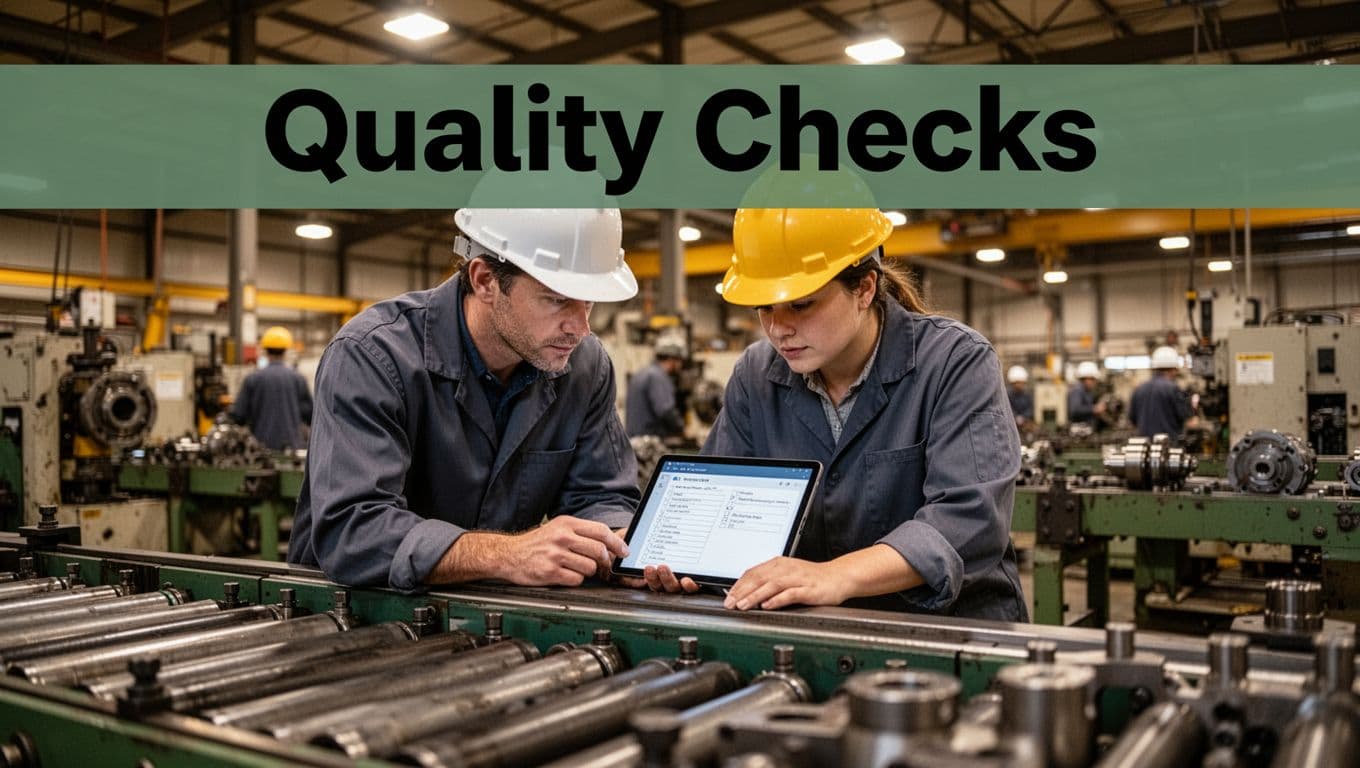
On job sites, checklists reduce the odds of hidden failures. A checklist can confirm correct bolt installation, joint alignment, or required safety steps before the next phase. When crews finish one stage, the next crew can rely on the checklist record.
The key takeaway is that checklists maintain quality standards because they treat work like a chain. If one link gets skipped, the whole chain weakens.
What Recent Studies Say About Checklist Power
So, what does research actually suggest? A lot of evidence points to one main theme: checklists help when they are used as part of a broader system, not as a standalone form.
In aviation and healthcare, researchers have discussed how checklists support safety by reducing variability and prompting teams to verify critical items. One accessible overview is Back to basics: checklists in aviation and healthcare. It explains why checklists work, especially when combined with teamwork and communication.
In healthcare, systematic reviews also track checklist effects across studies. A 2025 open-access systematic review and meta-analysis examined the completeness of WHO surgical safety checklist implementation and what influences it. If you want to see the research details, check Completeness of WHO surgical safety checklists.
What’s consistent across these studies? Checklists tend to work better when:
- Teams use them in real time, not after the task.
- Leaders train people on both steps and purpose.
- The checklist links to communication, such as briefings and sign-outs.
- Data from misses leads to updates.
The practical lesson is that checklists maintain quality standards when they become a habit. That habit depends on design, training, and follow-through.
Smart Steps to Create Checklists That Stick for Your Quality Goals
A checklist that no one trusts will sit in a folder. A checklist that teams use becomes part of quality culture. So how do you design one that sticks?
Start by tailoring the checklist to your work. If your checklist copies someone else’s template, it will miss your real risks. Instead, map your process steps and identify where failures usually happen.
Next, keep it readable. A long list often gets skimmed. Focus on the critical steps that prevent defects, rework, or safety risk.
Here’s a simple way to plan your checklist before you write anything.
| Checklist element | What to include | Example |
|---|---|---|
| Step | One clear action per line | “Verify part number and lot code” |
| Rule | Pass or fail criteria | “Match label to work order, no exceptions” |
| Owner | Who checks it | “Line lead, not the assembler” |
| Timing | When it happens | “Before assembly, before packaging” |
| Evidence | What gets recorded | “Initials and date/time” |
This structure helps teams understand what matters, and it makes audits easier.
Design Tips for Simple, Effective Lists
Good checklists don’t try to teach the whole job. They guide the most error-prone steps.
Use these design rules:
- Write for the user’s role: If you’re checking, what do you look at?
- Use plain words: Avoid vague phrases like “review.”
- Add pass or fail: A step without a rule becomes opinion.
- Keep steps action-based: Start with verbs, like “measure,” “scan,” “confirm.”
- Include “stop” triggers: If something fails, the next step cannot proceed.
Also, connect the checklist to standards your organization already uses. If you operate under aerospace quality systems, audits often depend on checklist-driven evidence. For a related example, see AS 9100 audit checklist guidance. Even if you don’t follow aerospace, the idea holds. Audits work best when evidence is consistent and easy to find.
Finally, plan for updates. When audits or investigations uncover a repeated miss, revise the checklist step. Treat it like a living tool.
Training and Tech to Boost Results
A checklist won’t work if people don’t understand why it exists. Training should cover both the steps and the reasoning behind them. When the team knows what the checklist prevents, they use it with more care.
A simple training approach looks like this:
- Show a real failure: “Here’s what happens when we skip this step.”
- Practice the checklist: Do a dry run with the team.
- Use short briefings: One-minute pre-task talk beats long lectures.
- Review misses: When an item fails, focus on the cause.
Technology can help, especially when you need traceability. Paper checklists can work well, but digital tools can reduce lost forms and improve visibility. They can also trigger reminders and store evidence automatically.
If you want a broader guide to quality checklist setup, the quality checklist guide from Qualityze is a helpful reference for structure and best practices.
One more practical tip: involve the people who do the work. They know where work breaks down. When they help shape the checklist, the team uses it more often and with fewer shortcuts.
Conclusion
A checklist is simple, but it protects quality in a powerful way. It prevents errors by forcing key checks, and it keeps results consistent across shifts and teams. In high-stakes settings, that reliability can mean the difference between safe outcomes and avoidable harm.
If you want an easy next step, pick one process where mistakes show up. Then build a short checklist with clear steps and pass or fail rules. Start small, train the team, and update it after real feedback.
When you treat checklists maintain quality standards as a habit, quality stops being random. It becomes repeatable, visible, and easier to improve. What process in your work needs that kind of dependable routine first?