A single faulty part can turn a normal week into a costly recall. In 2025, the US saw 3,295 product recalls affecting 858 million defective units. That’s why quality control importance keeps rising for manufacturers and service teams.
Quality control (QC) is the process of checking finished products or services for defects. The goal is simple: make sure they meet set standards before customers get them. In 2026, QC often uses AI and digital tools to spot issues faster than people can alone.
Because QC usually happens right after production, it acts like a final gate. It doesn’t fix everything, but it stops bad items from leaving the building. Next, let’s break down how QC works and how it differs from quality assurance.
Breaking Down Quality Control: The Core Idea and How It Works
Quality control is about inspection and testing. You look for problems in products, parts, or service results. Then you correct them before shipment, delivery, or release.
Think of QC like a last security check at an airport. You still run screening earlier, but the final check catches what slipped through. In everyday terms, QC helps teams answer one question: “Is this ready for real use?”
Most QC programs follow a few core principles:
- Consistency: you apply the same checks each time.
- Standards adherence: you compare results to clear specs.
- Acting as a gatekeeper: if it fails, it doesn’t go out.
- Early correction: you fix issues as soon as they show up, not weeks later.
A key detail: QC focuses on finished outputs. Quality assurance (QA) is broader. QA helps prevent defects from happening in the first place by improving systems and processes. The American Society for Quality explains the difference well in their guide on quality assurance vs quality control.
Here’s a simple flow you can picture:
- Detect defects (visual checks, tests, sensor scans)
- Measure against specs (numbers, tolerances, pass-fail rules)
- Correct issues (rework, repair, reject, or contain)
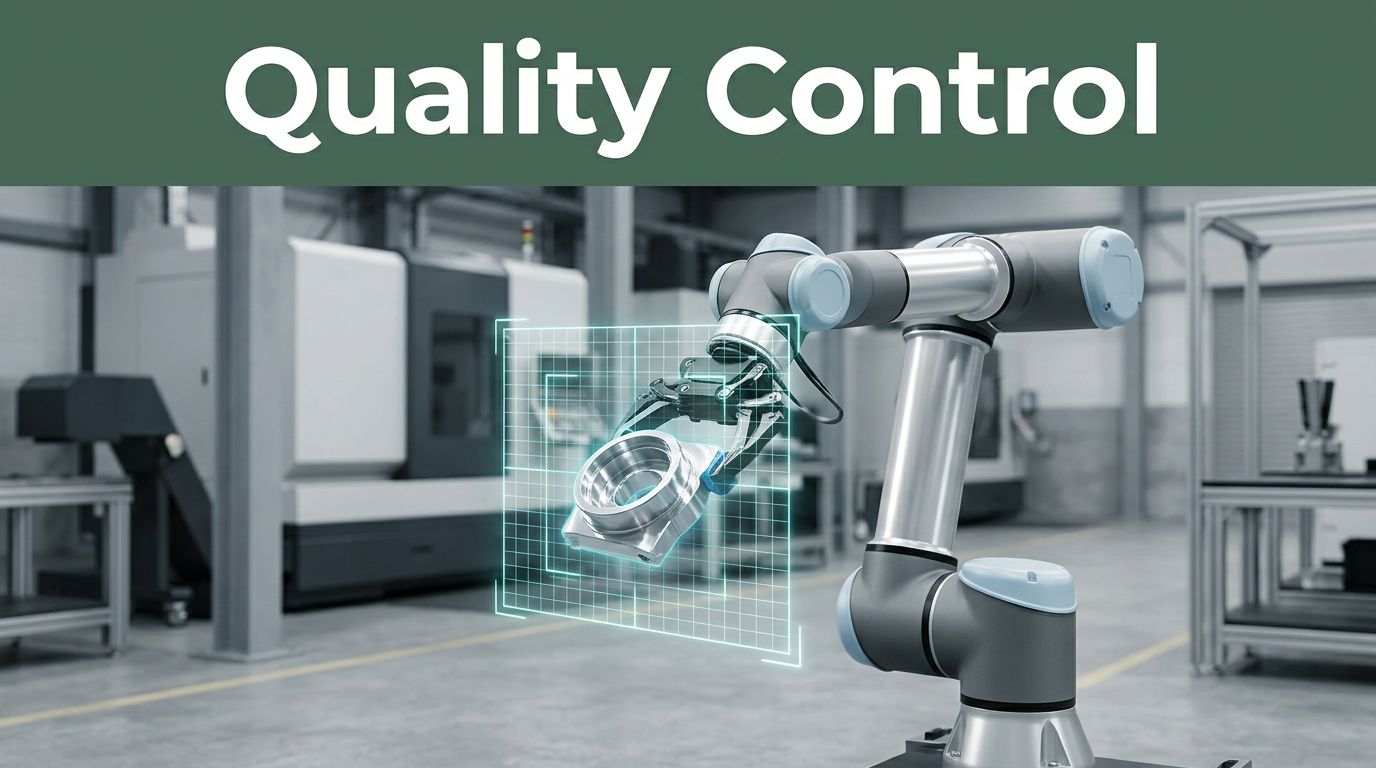
In 2026, more teams use AI-driven inspection. Sensors and cameras can check surface flaws, fit, and alignment in seconds. At the same time, teams still need human judgment for edge cases and safety-critical decisions.
QC also reduces waste. When you catch defects at the end of a line, you prevent rework, returns, and customer complaints. That’s true in manufacturing, but it also applies to services. A customer service team can “QC” a call by sampling outcomes and measuring accuracy.
Statistical Process Control (SPC) adds another layer. SPC uses charts to spot drift early. When the process starts trending toward trouble, QC can react sooner. If you want a beginner-friendly view of SPC, see this guide on Statistical Process Control (SPC).
Everyday Steps in a Quality Control Process
The steps below describe what many teams do before a product ships or a service closes.
Start with visual inspection. People look for cracks, chips, missing labels, or poor assembly. Then move to measurements. Tools like calipers, gauges, and microscopes confirm dimensions and tolerances.
Next come functional tests. These check how the item performs in real conditions. For electronics, tests might include voltage checks. For food, tests might include contaminant screening.
Finally, teams record results in data logs. That way, the same defect doesn’t surprise you again next week. It also helps identify patterns by shift, machine, supplier lot, or operator.
In many factories, sensors handle the measuring. Cameras capture images. Vibration monitors track consistency. Temperature sensors confirm safe processing. Then QC compares those numbers to requirements.
A lot of QC work is “simple but strict.” If a part fails, you decide what happens next:
- Repair and retest, if it’s safe and allowed
- Scrap, if the defect can’t be corrected
- Containment, if a batch looks risky
Here’s the big takeaway: QC is not one test. It’s a set of checks that work together, so defects get caught early enough to matter.
Why Invest in Quality Control: Benefits That Pay Off Big Time
Want happier customers? Start by reducing the odds of failure. Quality control does that.
When QC catches problems before shipment, you cut costs and protect your reputation. In the long run, good QC also helps teams plan better. The data tells you where defects come from and when they spike.
Let’s make the benefits concrete.
First, QC helps teams avoid recalls. Recall costs can be brutal, even when the fix is simple. In 2025, automotive recall costs included $600 million in charges plus $2 billion in warranty (about 4% of sales), according to recent reporting.
Second, QC improves daily economics. It reduces scrap, rework, and returns. It also cuts the time spent investigating defects after customers complain.
Third, QC builds trust. When products perform as promised, customers reorder. Reviews get better. Support tickets go down. Over time, the market learns your output is dependable.
Also, QC makes future issues easier to spot. Instead of reacting to failures, you detect trends. Then you adjust machines, training, or supplier checks before defects grow.
This is part of why many organizations see strong results. Real-time quality monitoring can cut downtime and reduce waste. According to recent manufacturing ROI summaries, companies see:
- Maintenance costs drop by 20–40% with automated equipment health tracking
- Downtime drops by 26% or more
- Quality investigation time can shrink by up to 90%
- 70% of manufacturers recover their money within the first year of installing automation
If you want an example of how QC can support a better overall quality system, this overview on the importance of quality control in manufacturing success is a solid starting point.
Here’s a quick reality check:
If you only test at the end, you learn too late.
QC is how you learn fast enough to prevent damage.
Cost Savings and Waste Reduction You Can Count On
Money saved is usually what gets leadership attention first. And QC saves money in a few clear ways.
Quality control lowers rework. Instead of fixing defects after they’re built into assemblies, you catch them before they travel far.
It also lowers scrap. Scrap is expensive because you pay for raw materials and labor. You also lose time that could’ve produced good units.
Then QC reduces returns. Returns don’t just cost shipping. They cost handling, testing, and customer support.
Use a simple example. Suppose 5% of units have defects and each bad unit costs $2,000. That’s 0.05 × 1,000 units × $2,000 = $100,000 wasted cost. If QC helps bring defects down to 1%, that becomes 0.01 × 1,000 × $2,000 = $20,000. You save $80,000 in that one run.
Teams track these with KPIs like:
- Defect rate (how many fail)
- Scrap rate (how many get discarded)
- First-pass yield (how many pass without rework)
As these metrics improve, your unit cost drops. You also get more steady production. That steadiness can matter as much as the savings.
Building Customer Trust and Long-Term Loyalty
Customers notice when things work. They notice even more when they don’t.
QC reduces:
- broken items
- wrong specs
- inconsistent performance
When customers get reliable products, they come back. They also spend less time dealing with support issues. Many companies see fewer returns and fewer complaints once QC catches issues before shipping.
There’s also a brand effect. When your output is consistent, trust grows. People share fewer negative stories. Positive experiences also travel faster than ads.
One helpful way to think about trust is this: QC makes your promises real. Without QC, those promises turn into guesswork.
Hands-On Methods and Tools to Make Quality Control Effective
Quality control methods vary by industry. Still, many tools share the same goal: find defects with less waste.
Here are common QC approaches you’ll see in manufacturing and service operations:
- Inspections (visual and measurement checks)
- Testing (lab checks, stress tests, functional tests)
- Statistical Process Control (SPC) (charts that track process variation)
- KPIs and reporting (defect rate, yield, pass-fail trends)
A traditional QC program might rely mostly on inspections. A modern program combines inspections with sensors and data systems. In 2026, AI adds speed, especially for visual defects and incoming quality risk.
If you want a broad list of QC techniques, this post on 11 quality control methods and techniques is a useful reference while you plan your program.
From Basic Inspections to Smart AI Checks
Start with basic inspections. Visual checks catch obvious issues quickly. Measurements confirm tolerances. Functional tests confirm performance.
Next, add SPC. SPC uses control charts to separate normal variation from signals of a real problem. For example, a chart might show temperature or vibration starting to drift. When it crosses limits, QC flags the issue before it creates a batch of rejects.
If you want a plain explanation of SPC for real factories, Autodesk also breaks it down in what SPC means in manufacturing.
Then comes “smart QC.” In many plants, AI systems review images from cameras. They can spot:
- surface cracks
- misalignment
- incorrect textures
- damaged coatings
AI doesn’t replace all human work. It reduces the workload and helps teams find issues earlier. Meanwhile, teams still confirm safety-critical problems through testing.
In services, QC tools look different but follow the same logic. A call center can sample calls and score them against standards. A repair shop can QC job completion by verifying parts and outcomes. The core idea stays the same: check results, compare to specs, correct failures early.
If you’re a small team, don’t overbuild. Start with a narrow set of checks on the most common failure points. Then expand once you see which steps actually reduce defects.
The best QC system is the one your team uses every day.
Tools don’t help if nobody trusts the results.
Quality Control in Action: Examples, Hurdles, and 2026 Trends
Let’s bring this to life. Quality control shows up in places you might not think about.
In automotive plants, teams use sensors to check engine parts during production. AI can flag parts that drift out of tolerance. That reduces late line stoppages and keeps more builds on track.
In food processing, QC often includes contaminant testing and safety checks. If a batch fails, teams stop it from reaching customers. That protects people and reduces the risk of high-cost recalls.
In maintenance and repairs, QC verifies that fixes actually work. A technician might replace a worn part, but QC confirms the machine performs correctly after the repair. Otherwise, the problem repeats and costs rise.
Now the hard part: hurdles.
Real Stories from Factories and Beyond
A common factory story sounds like this: a line kept producing “almost right” parts. Each one looked fine during a quick glance. Later, testing showed the real issue was small but consistent. With better QC checks, the team caught the defect earlier and reduced scrap.
In another example, a plant uses sensor-based inspection for welds or surfaces. Instead of waiting for a final lab test, the sensors flag issues right away. Operators can adjust the process before more units go bad.
In regulated food areas, QC can include scanning for contaminants and confirming safe processing conditions. When QC works, fewer risky batches slip through. When QC fails, the company pays with recalls, enforcement, and lost trust.
Tackling Common Roadblocks in Quality Control
Quality control runs into obstacles that look different across teams.
Manual cost and time is a big one. If inspection takes too long, it slows production. The fix often involves sampling rules, better fixtures, and automation for the most common defects.
Human error can also happen. People get tired, rush, or miss edge cases. Training helps, but tools also help. Sensors and standardized checklists cut variation.
Speed versus thoroughness comes up constantly. Teams want fast throughput, but they can’t skip safety checks. A practical approach uses risk-based QC. Focus the most intense tests on the highest-risk steps.
Then there’s data overload. More sensors create more numbers. Without clear rules, teams drown. The solution is tighter reporting, defined pass-fail thresholds, and dashboards that highlight exceptions only.
In the end, QC works best when it fits real workflows.
Exciting Trends Shaping Quality Control in 2026
Quality control in 2026 shifts from “find defects” to “predict problems.” AI plays a bigger role in that change.
Recent 2026 trends include:
- Predictive incoming quality control (IQC) that flags risky supplier parts early
- SPC supported by AI to detect patterns and drifting measurements
- AI tools that can take action, like adjusting machines when issues appear
- Focus on clean data, because bad inputs lead to bad predictions
Also, QC is expanding beyond final checks. More teams embed QC across processes, so defects don’t build up before anyone notices.
One more key point: the standards and compliance workload keeps growing in regulated industries. That’s why teams want QC systems tied to measurable outcomes like scrap reduction and yield improvement, not just inspection counts.
If your business depends on reliability, it’s worth upgrading your QC plan this year. Even small steps can reduce failures and protect your brand.
Quality control matters more than ever when you sell outcomes
Quality control is the process of checking finished products or service results for defects. It matters because it prevents avoidable waste, lowers recall risk, and protects customer trust.
You saw how QC works as a gate after production, and how it differs from quality assurance. You also saw methods like inspections, testing, and SPC, plus how AI is changing 2026 inspections.
Now ask yourself one question: How will quality control change your business this year?