
77% of US customers had a problem with a product or service in the past year. That number rose from 74% in 2023, so “good enough” support isn’t working anymore. When customers contact you, they want to feel valued and heard during every interaction.
Service quality means more than fixing the issue. It means how fast you respond, whether you prevent repeat problems, and whether your team treats people like humans. And mistakes add up fast. Bad service drives brand switching and costs businesses trillions, while the annoyance economy alone burns $165 billion a year from avoidable customer frustration.
In 2026, these failures show up in predictable ways, and you can catch them early. You’ll see common patterns like time-wasters (waiting and runarounds), trust-breakers (poor prevention and weak follow-up), and tech traps (AI and jargon that slow help down). Then you’ll get real-life style examples that match what customers complain about now.
Ready to spot these pitfalls before they hurt your bottom line?
Time-Wasters That Drive Customers Crazy
Most service quality mistakes are simple. They waste time, create extra steps, and keep people waiting long enough to feel ignored. When customers hit a hold line, get transferred, or loop through a chatbot, their mood drops fast. As a result, you lose patience before you even solve the problem.
In the US, the annoyance economy costs $165 billion a year, and a big part of that is customer service friction. People lose hours, stress out, and then stop trusting the brand. That’s why “just a quick hold” can become a loyalty problem.
If you want a practical list of what companies often miss, this overview of customer service mistakes is a useful starting point: Customer Service Mistakes and How to Avoid Them.
At the root, many time-wasters come from the same choice: teams don’t staff for real demand, or they design processes that make customers work around broken systems. Under the hood, that turns into phone queues, unnecessary transfers, and “self-serve” paths that never reach a real fix.

Long Holds, Transfers, and Endless Loops
Long holds sound harmless. They are not. Waiting signals “your time doesn’t matter.” And it gets worse when customers bounce between reps.
Here’s what time-wasters often look like:
- Long phone queues that feel like you’re “behind” everyone else
- Transfers that restart the whole process
- Chatbot loops that ask the same questions in new wording
Also, AI can help with simple tasks. Yet it breaks down with messy cases. In 2026, AI support still creates backlash, and many customers want human help. In fact, 79% of Americans prefer human help over AI, and 80% expect a human when they contact support.
When AI or process routing fails, frustration builds quickly. And when self-service doesn’t work, many customers move on. One churn stat shows how fast things escalate: 65% have left a brand forever due to poor service.
A relatable example: imagine tech support where an AI assistant says it can “resolve” your issue, but it cannot. Then it routes you back to the same basic troubleshooting steps. By the time a human joins, you’ve already spent an hour, and anger has set in.
Waiting doesn’t just cost minutes. It steals trust.
Forcing Customers to Repeat Everything
Even shorter time-wasters can hurt. One of the worst is when systems fail and customers must explain their problem again.
This mistake often happens because of weak note-taking, missing account context, or broken handoffs. When a rep asks for the same details, customers feel like the company forgot them. Or worse, it acts like the issue is their fault.
Picture this: a customer calls about a billing error. The first agent takes notes, but the next person does not see them. The customer repeats the whole story, then repeats it again after another transfer.
That pattern erodes confidence fast. Customers don’t just want the answer. They want proof you’re paying attention. When you make them retell everything, you turn one issue into a long ordeal.
This also links to churn. When service failures stack up, customers don’t “try again.” They switch. In one set of findings, consumers switch after bad experiences at very high rates, including 96% who cut ties after bad service.
So if you’re serious about service quality, train for handoffs and record notes. A good system makes repeats rare. A bad system makes repeats normal.
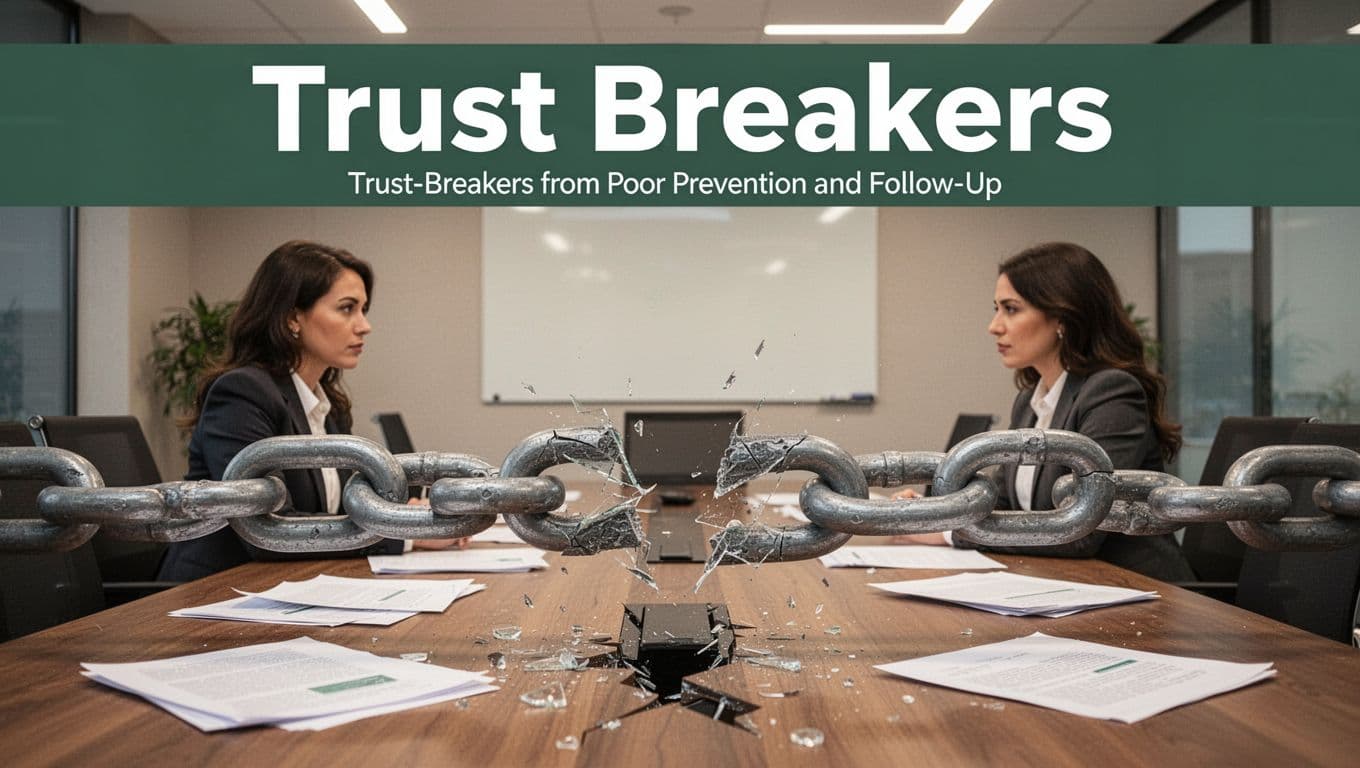
Trust-Breakers from Poor Prevention and Follow-Up
Time-wasters are loud. Trust-breakers are quieter, but they last longer. A business can keep people waiting and still earn forgiveness if it’s clear you’ll fix the root cause. But if you react late, skip check-ins, or ignore feedback, customers feel dismissed.
Two prevention failures hit hardest. First, teams respond to complaints instead of preventing the next one. Second, they don’t follow up after they “solve” things.
When customers feel uncared for, they don’t wait around. They switch quickly. One reason is simple: bad service hits emotions. In one set of results, 56% of customers say bad service wastes their time, and 63% feel angry about it.
If you want an approach that brings empathy into fixes, this guide on improving empathy in customer service is worth reading: How to Improve Empathy in Customer Service.
Still, empathy alone doesn’t fix everything. You need prevention too. Otherwise, you’re just comforting people while the same problem returns.
Reacting Late Instead of Preventing Issues
A common service quality mistake is treating problems like one-off events. In reality, many issues repeat because something upstream keeps failing.
For example, maybe a product ships with the same defect in one batch. If your team only handles complaints, you’ll see the same calls again and again. Meanwhile, customers lose time and money each time.
That’s why prevention matters. When you track patterns, you can stop the loop. Feedback isn’t just a nice-to-have. It’s data that tells you where the next failure is hiding.
This connects to the earlier “problem rate” reality. Since 77% of customers had a problem in the past year, prevention is not optional. The more you prevent, the fewer customers hit support in the first place.
Practical prevention looks like:
- Spot repeat complaints by category (not just by one ticket)
- Fix the cause, not only the symptom
- Update scripts, policies, and system rules based on real cases
If you do this well, you reduce calls and protect revenue. If you don’t, you buy churn with every “we’ll look into it” message.
Skipping Follow-Ups and Showing No Empathy
A lot of brands treat the case as finished when the ticket closes. Customers don’t see it that way. They judge you based on whether the problem stays solved.
That’s why follow-ups matter. A quick check shows respect. It answers the question customers think but rarely say: “Did you actually fix it, or did I just hope hard enough?”
Empathy also matters. When support sounds cold, customers assume the company doesn’t care. Even when your solution is correct, tone can still damage trust.
Here’s what this looks like in real life:
A customer gets a refund, but nobody checks if the money arrives. Or a rep resolves an issue, then ends the conversation with a generic goodbye. No “Did this work for you?” No “Want to confirm your next steps?”
In contrast, good empathy is small and specific. It includes clear next steps and one simple check-in. Customers feel valued when you treat the outcome like something you own, not something you hope works out.
Tech and Talk Traps That Confuse Everyone
In 2026, many companies rely on automation and faster tools. That can help. Yet tech fails when it blocks human help, hides critical details, or uses language customers don’t understand.
Also, AI is not magic. When a customer needs context, the model can still guess wrong. That creates delays and frustration, especially when support requires judgment.
This is why smart service uses tech as support, not as a wall. As one reliability lesson, you can’t automate away human responsibility.
For context on AI support failures, Fortune reported on incidents where AI agents gave inaccurate advice, forcing humans back into the process: AI agent inaccurate advice forced humans. Stories like that keep repeating because customers notice when answers feel off.
Overusing AI Chatbots Without Backup
AI chatbots are best for clear tasks, like password resets or order status. They fail for emotional problems, complex policy questions, and unusual cases.
A big service quality mistake is deploying AI but cutting the backup team. Then customers get stuck in “self-service” land. They keep asking for help, but the bot won’t hand off fast enough. Meanwhile, customers are losing time, and anger grows.
This is where the 2026 backlash shows up. Many people expect human support. If you don’t offer a quick handoff, you’ll push people away even when your pricing is strong.
If customers don’t get an answer quickly, they switch. And when they switch, you lose lifetime value, not just this ticket.
So the fix is not “use less AI” only. The fix is balance. Give AI a job it can do well, then set a fast path to a human when it can’t.
Jargon Overload and Dismissing Feedback
Jargon is a slow poison. It turns simple support into a translation task. Customers don’t want to study terms. They want plain answers.
A second mistake is how teams use feedback. Some companies run surveys that sound good but don’t capture what workers hear every day. Other teams ignore staff feedback because it doesn’t fit an internal dashboard.
Meanwhile, customers talk in real life. They mention delays, confusion, and repeated steps. If you dismiss that input, you repeat the same mistakes for months.
Tone matters too. One reason service fails is that companies treat feedback like a threat, not a signal. In contrast, when you listen to frontline notes, you catch patterns earlier.
If you want another example of why tech output can feel creepy or wrong, The Conversation covered issues with an AI agent rollout where the assistant produced unexpected responses: AI agent “mother” error signals rollout problems.
Real-World Slip-Ups and 2026 Wake-Up Calls
Mistakes don’t only happen in one industry. Customers see the same patterns everywhere. That’s why “service quality” should be a shared standard, not a department slogan.
Here are common slip-ups, shown in the way customers experience them:
| Mistake | What it looks like | Customer cost | Fix that helps |
|---|---|---|---|
| Mailing the wrong way | A simple refund requires mailing a check | Lost days and extra trips | Offer online options, train for exceptions |
| Chatbot dead ends | The bot repeats steps, then “can’t help” | More time, more stress | Add quick human handoff triggers |
| Manual tracking | Agents can’t see history, so cases restart | Repeat explanations | Centralize customer notes and account data |
| Hidden transfer hops | Support routes calls without context | Waiting plus confusion | Use one ticket thread across reps |
A quick example that matches what customers complain about: a person files an insurance request, then gets told they must mail paperwork for a $50 check even though online forms exist. That’s not “policy.” That’s a service quality mistake. It feels like the company wants to make resolution hard.
In 2026, the wake-up call is this: customers don’t need wow moments. They need fewer barriers and more follow-through. When you fix the basics, loyalty rises.
Also, the upside is practical. You reduce repeat calls, cut churn, and protect sales. Better service isn’t charity. It’s a cost control strategy that customers actually feel.
Conclusion: Spot the Patterns Before They Become Your Brand
Service quality mistakes usually follow a pattern. Time-wasters burn trust first, trust-breakers keep it from healing, and tech traps confuse people when they need help most. Because 77% of customers faced a problem recently, you can’t rely on luck.
The strongest takeaway is simple: customers don’t leave after one issue. They leave after a pattern of wasted time, weak prevention, and zero follow-up. Bad experiences drive massive switching costs, and the annoyance economy shows how expensive frustration is.
If you want a next step that works, do one thing today: review your support path like a customer would. Then train for empathy, improve handoffs, and balance AI with real humans.
Start fixing one mistake today, and share in the comments what you’ve seen. What one barrier do customers mention most often?