
Ever wait on hold, then get transferred again, and nobody seems to know your issue? That kind of service breaks trust fast. Customers feel like they have to restart their story from scratch.
To keep things steady, employees need more than “be nice” advice. They need habits, training, tools, and clear steps that work on every shift. When you ensure consistent service quality, customers know what to expect, and your team spends less time fixing the same problems.
In 2026, expectations keep rising. People want quick help across phone, chat, email, and social. They also expect training that fits real schedules, including micro-learning. On top of that, many teams now use sentiment analysis to catch frustration early.
So how do employees actually deliver top service every time? The answer is practical and teachable. The sections ahead show the skills, tech, teamwork, and measurement methods that turn “good days” into reliable service.
Master Key Skills with Targeted Training
Consistent service quality starts with skills people can repeat under pressure. When agents can listen, explain, and solve issues clearly, customers feel cared for, even when the problem is tough.
In 2026, many companies use micro-learning because short lessons stick. Agents get quick practice sessions, then apply them right away. Teams also track progress with role-based scorecards, so coaching stays specific, not vague.
Employee training for service quality should focus on the basics that customers actually notice. Active listening, empathy, problem-solving, and clear communication form the “core set.” When these skills are firm, quality stays steady across different people and different days.
If you want a strong model for training and using a playbook, Zendesk’s overview on customer service training for 2026 is a helpful reference for what good training covers.
Here are habits employees can practice daily to keep quality consistent:
- Listen before you speak: Let the customer finish, then confirm what you heard.
- Use simple next steps: Tell customers what happens next, in plain language.
- Keep messages consistent: Use the same terms for key policies and outcomes.
- Do a quick “quality check”: Read your reply like a customer would.
Build Empathy and Active Listening Habits
Empathy is not just a mood. It’s a behavior customers can feel. When you speak with calm, you lower the temperature of the whole call.
Start with active listening. That means you don’t rush to fix. Instead, you focus on what the customer is saying and what they mean.
A simple approach works well:
- Paraphrase their words: “So the shipment didn’t arrive, and you need it for Saturday.”
- Name the impact: “That delay messes up your plan.”
- Ask one clear question: “What address should we verify?”
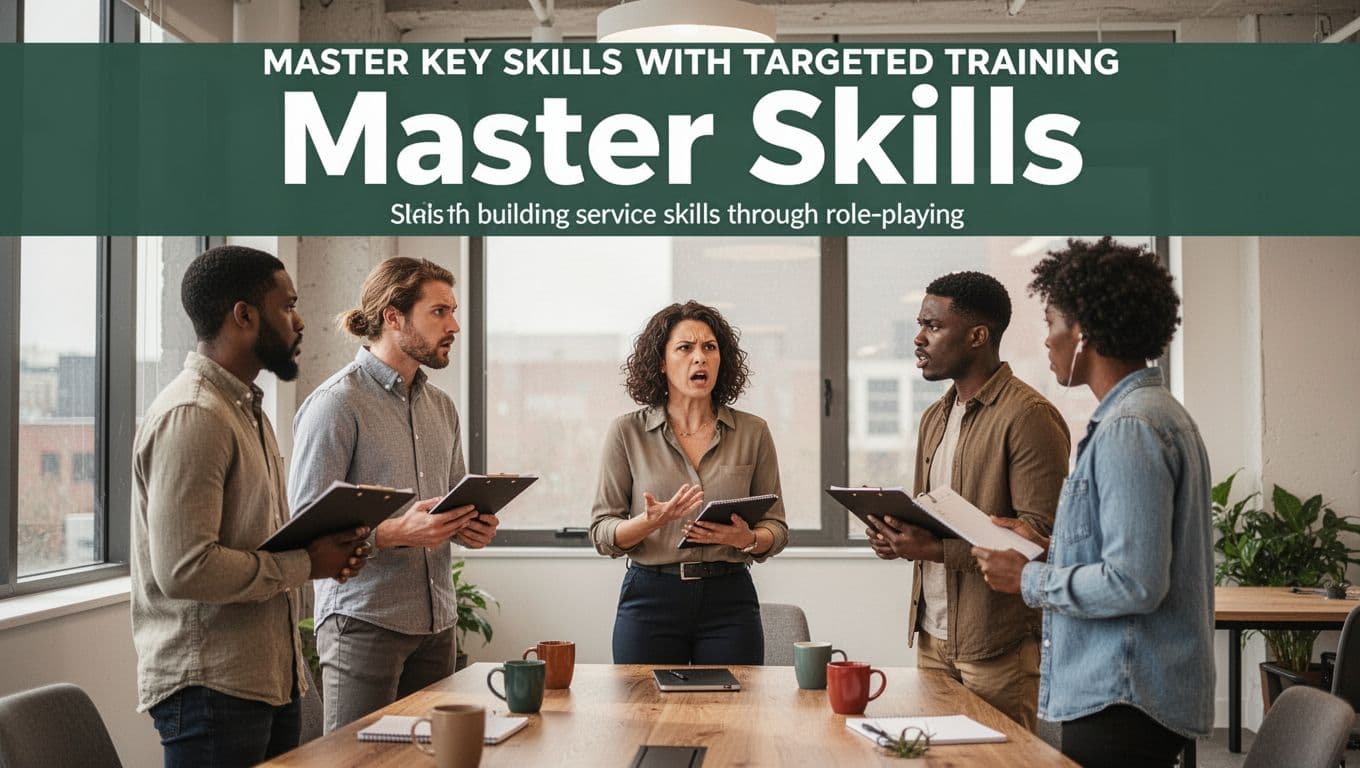
Role-play helps because it builds muscle memory. Have employees act as both the agent and the upset customer. Then switch roles so everyone learns how their tone lands.
Many teams also use sentiment analysis to spot frustration in real time. Instead of guessing, they detect anger or churn risk from customer messages. For more on how sentiment analysis supports service quality, see how sentiment analysis improves customer experience.
The point isn’t to “score” people. It’s to catch trouble early, then respond with the right tone.
Sharpen Problem-Solving in Real Scenarios
Empathy helps customers feel heard. Problem-solving is what makes them feel safe.
When employees get consistent at the same problem structure, service quality stays even. A customer never needs ten different explanations. They need one path that leads to a fix.
Have employees follow a simple sequence during training:
- Identify the root cause (not just the symptom).
- Confirm what the customer needs (timing, outcome, budget).
- Brainstorm options (from best to backup).
- Test a solution when possible.
- Close the loop with a clear result and next step.
This is where customer service playbooks help. If you want an example of how to build and train teams around a playbook, read building a customer service playbook and training.
Real scenarios matter most. Train on common issues, then add “hard mode” cases. For example, a return with missing proof, a late delivery with unclear address, or a billing error with a rushed timeline.
When employees practice these cases often, they stop improvising under stress. As a result, quality stays steady.
Harness Technology for Smooth, Unified Service
Skills are essential, but tools shape consistency too. When employees have to search for info, they spend less time listening. They also risk missing details.
Modern teams use updated customer records so employees can see a full history across channels. That includes chat, email, phone, and social. Instead of repeating everything, customers get continuity.
Omnichannel support matters because customers expect the same answer no matter where they start. If someone chats today and calls tomorrow, the service should feel like one conversation.
For an overview of omnichannel customer service and how teams apply it in 2026, check omnichannel customer service best practices.
Good tools also support faster help. They provide context, suggested replies, and relevant policy details. This reduces time wasted on “where do I find that?” and helps reps focus on people, not tabs.
A key metric teams watch is first contact resolution (FCR). Customers love it because their issue ends sooner. Also, employees feel less burned out when problems don’t bounce around.
Here’s the tradeoff to remember: speed is helpful, but correct answers matter more. Tech should support both.
Switch Channels Without Losing Context
Customers jump channels for a reason. They might move from chat to phone because the issue got bigger. Or they switch to email when they need a written record.
Employees keep quality consistent when they:
- Summarize the current issue at the start of the new channel
- Use the same tone (friendly, calm, not defensive)
- Reference the same facts from the customer history
- Confirm resolution steps so nothing falls through
Even a short, structured handoff beats vague notes. “Talked about delivery timing and updated address” is clearer than “Customer upset.”
Use Real-Time Data for Personal Touches
Real-time data can make service feel personal, not robotic. Employees can view past purchases, prior tickets, preferences, and prior outcomes. Then they tailor the next step.
For example:
- If a customer complained once about sizing, the rep can mention that detail again.
- If a customer always picks a certain delivery window, the rep can suggest it first.
- If a customer shows frustration through their wording, the rep can adjust tone and offer a clear plan.
Sentiment signals help too. When employees notice anger or urgency, they avoid slow back-and-forth. They also choose the right escalation path.
This matters for consistency. Without shared context, employees rely on memory. With real-time data, employees follow the same facts.
Strengthen Teamwork and Clear Processes
Consistency doesn’t live only in one agent. It comes from how your team shares information and handles exceptions.
Clear processes also reduce “hidden variation.” If one rep escalates billing disputes and another rep resolves them, customers experience two different realities. When you document rules and build escalation paths, quality becomes repeatable.
Customer-first playbooks help with this. They guide employees on what to say, what to check, and when to escalate. They also help teams avoid repeating the same details over and over.
Team huddles support consistent execution too. When agents share the top wins and the top failures, the whole group improves. Even a 10-minute end-of-day sync can reduce future mistakes.
Some teams use contact center best-practice reviews to tighten consistency across shifts. If you want a view of what high-performing operations focus on, see contact center best practices for 2026.
Follow Playbooks and Know When to Escalate
Playbooks work best when employees know the “limits of ownership.” That’s what makes escalation feel smooth, not like a handoff failure.
A practical escalation flow looks like this:
- Use the playbook first for standard cases.
- Collect required details before you escalate.
- Explain what you already tried (briefly).
- State the customer outcome you want.
- Transfer with context, not just a ticket number.
When employees follow this, escalations don’t reset the story. The next agent starts where the last agent left off.
Recognition also plays a role. Employees repeat what they’re rewarded for. If your team celebrates clear communication and good outcomes, quality rises across the board.
Keep the Human Touch Alive Every Shift
Tech and process help. Still, customers come for people.
In the US, many customers prefer real humans over AI. Reps should use tools as support, not a substitute for warmth. When an employee adds care and clarity, customers stay calm.
Here’s where human touch becomes daily action:
- Offer real reassurance: “I’ll stay with this until it’s fixed.”
- Use the customer’s name and acknowledge their situation.
- Connect to the right person when needed, not a bot loop.
- Reach out with a quick call for high-risk churn cases, like cancellations or repeated delays.
Also, track sentiment beyond speed. A fast resolution that leaves the customer feeling dismissed can damage loyalty.
Customers want to feel understood. Employees ensure consistent service quality when they deliver both accuracy and respect, even on long shifts.
Measure What Matters and Keep Improving
Employees don’t improve quality by guessing. They improve when they can see patterns and get feedback fast.
The most useful metrics depend on your service goals, but these show up often:
- First contact resolution: Did the issue end on the first try?
- Customer effort score: How hard did it feel for the customer?
- Sentiment analysis: Did the customer sound calm, frustrated, or ready to leave?
Employees can use these signals in two ways. First, they identify what to repeat. Second, they spot where training needs to change.
A simple feedback loop helps:
- Review short call or chat samples weekly.
- Share one coaching point and one win.
- Update playbooks when the same issue repeats.
Recognition keeps this going. When you praise reps for good communication and resolved outcomes, you reinforce the behaviors that protect quality.
Most importantly, measurement should connect back to action. If you track metrics but never change training or playbooks, you train for numbers, not service.
Conclusion
Service quality stays consistent when employees get real skills, clear steps, and the right tools. Training builds the fundamentals. Technology keeps customer history in view. Team processes prevent gaps, and human touch protects trust.
A strong way to start today is simple: pick one habit, like paraphrasing the customer’s issue before you respond, and practice it on every interaction. Small changes add up when everyone repeats them.
If you’re part of a service team, share one method you use to keep quality steady. Better yet, try one training session this week and watch what changes when employees feel prepared. When you treat service like a repeatable craft, you earn ensure consistent service quality every shift.