
A phone that breaks after a month feels personal. A restaurant meal that’s cold and wrong is even worse. You start asking, “How did this happen?”
In 2026, quality problems cost businesses billions and frustrate customers who expect things to work. People don’t forgive easy mistakes anymore, especially when they can switch brands fast. The goal here is simple: understand the main causes of quality issues, so you can spot them early, fix them faster, and protect trust.
Most quality failures trace back to a few repeat offenders. Human errors slip through. Flawed processes let defects sneak by. Supply chain surprises disrupt consistency. Management choices push the wrong priorities. Then new 2026 pressures make all of it harder.
So instead of blaming “bad luck,” you’ll look at what usually goes wrong, why it happens, and what patterns to watch. Ready to see why this happens?
How Human Errors Turn Good Ideas into Flawed Products and Services
Quality failures often start with people. Not because teams don’t care. It’s usually because the work is stressful, time is tight, or the instructions are unclear.
Human error shows up in both products and services. In manufacturing, it can mean skipping a step, using the wrong part, or wiring something in the wrong place. In services, it can mean sending the wrong order, misreading a request, or giving a client outdated info. When those mistakes pile up, the result looks like “poor quality,” even though the root cause is often human.
Here’s a reality check. In the US, human factors drive most serious incidents, with figures like 80% to 90% of serious workplace injuries and 96% of workplace accidents tied to human behavior. Also, human error contributes to 23% of unplanned manufacturing downtime. That tells you something important: when people make small errors under pressure, the fallout can be big. For more on how manufacturing defects form and spread, see a practical guide to manufacturing defects.
One reason mistakes stick is that quality work often happens at the wrong time. Teams focus on the final check, instead of the moment the error enters the process. Then, instead of fixing one issue, you fix ten. That’s why returns, rework, and customer complaints can explode.
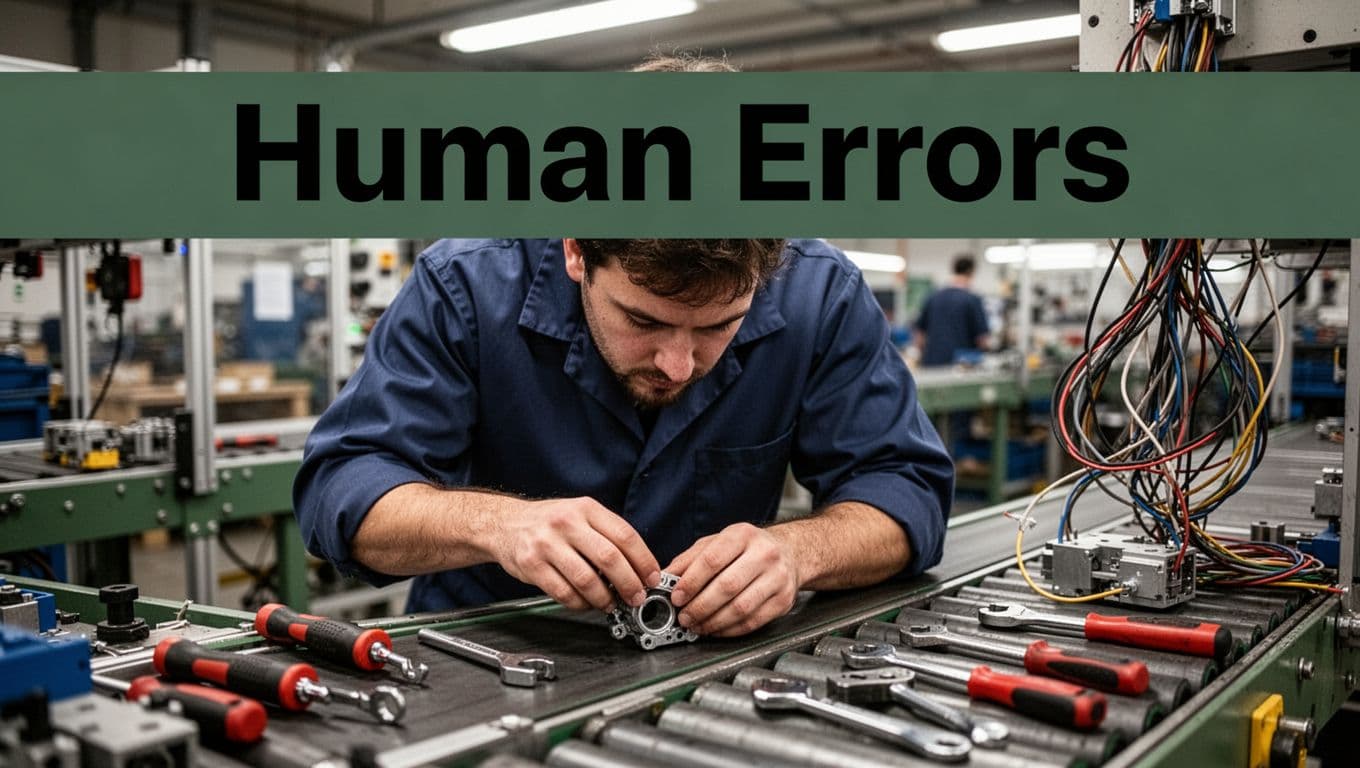
Common errors and what they cause
Use this table as a quick mental model. If you recognize these patterns, you likely found the problem early enough to stop it.
| Human error type | What it looks like | Typical impact |
|---|---|---|
| Skipped step | Step left out during assembly or setup | Defect rate rises, returns increase |
| Wrong input | Wrong part, wrong SKU, wrong customer detail | Customer gets the wrong result |
| Misread instructions | Old SOP, unclear checklist | Inconsistent outputs across batches |
| Rushed handoff | Transfer done fast between teams | Errors multiply before checks catch them |
| Poor inspection focus | Check done quickly, not carefully | Defects pass, then repeat later |
You can train people. That helps, but it doesn’t fix the real cause by itself. The deeper question is why errors happen in the first place. Keep reading, because fatigue and training gaps explain a lot.

Tired or Rushed Workers Missing Simple Steps
Tired workers miss simple steps. That’s not an insult, it’s physics. When people feel rushed, they shorten mental checks. Then small mistakes become repeated defects.
On an assembly line, fatigue can show up as uneven assembly, wrong torque, or incomplete labeling. In services, it can mean mixing up order numbers, skipping a required approval, or failing to follow a client’s exact request.
In 2026, staffing strain makes this worse. Shortages push teams to work faster, especially around packaging and fulfillment. If you compress timing, you compress attention. Then you see inconsistent batches or uneven service quality.
Also, fatigue creates “quiet variance.” The product might pass one day. It might fail the next. That inconsistency is often the clue that people are working under different pressure levels.
If you want a deeper look at how human error differs by context, Engineering.com covers how manufacturing experiences human-error problems more than many other sectors. See human error is worse in manufacturing.
Lack of Training Sparking Avoidable Mistakes
Training gaps also create defects. Sometimes the team never learned the “why,” so they only follow rules loosely. Other times, training exists but it’s out of date.
A common issue: teams use old tools. Paper lists, outdated forms, or disconnected spreadsheets. Then staff improvise. Improvising under time pressure leads to errors.
In services, untrained staff can cause the wrong outcome fast. A repair tech might miss a step because the new model behaves differently. A food prep team might mis-handle storage rules. A support rep might send a workaround instead of the correct fix.
One reason this becomes expensive is that errors often get caught late. By then, you already shipped, delivered, or billed. Fixing an error after the fact costs far more than preventing it. To see more ways quality escapes happen, review quality escape root causes.
So yes, training matters. But even good training can fail if the process and systems keep pushing people into mistakes.
Flawed Processes That Let Quality Problems Sneak By
Even strong teams can produce bad work if the process is weak. Think of it like a leaky boat. A great sailor can still get wet if the hull never gets fixed.
Flawed processes show up in a few patterns:
- Quality becomes someone else’s job instead of a shared duty.
- Checks happen at the wrong time, or they’re too inconsistent.
- Handoffs are messy, so errors multiply across teams.
- There’s no feedback loop between complaints and process updates.
This is one of the most frustrating parts of quality work. You can hear about defects only after customers notice them. Then your “quality system” feels like damage control.
Siloed Teams Blocking Real Fixes
When teams work in silos, problems stay invisible. One team finds a defect pattern, but another team owns the fix. Then nobody truly connects root cause to changes.
You often see slow problem-solving in these setups. A frontline employee might raise a concern. Meanwhile, other teams keep using the same steps. Even worse, process updates can take so long that people stop reporting issues.
Siloed quality also blocks learning. Instead of sharing what happened, teams defend their part. Over time, the company loses trust in the quality system.
As a result, you get repeated escapes. The same defect shows up in the next batch. Customers notice again, and everyone feels surprised. It’s not surprise, it’s a loop.
Inconsistent Checks Wasting Time and Money
Inconsistent checks waste money. They also waste trust.
In manufacturing, inconsistent checks can look like uneven sampling, rushed inspections, or different measurement tools across shifts. In services, the same customer request might get handled differently by different agents.
A big cause is unclear standards. If teams use multiple systems, quality can suffer. For example, you might have to jump between apps, emails, and phone notes. Then details get lost at handoff.
Also, without follow-up between teams, checks don’t improve the process. Complaints become a report nobody reads. Or worse, the complaint gets closed without changing the root cause.
One more thing: process problems often tie to waste. If you want examples of how waste and defects pile up in manufacturing, this article on causes of waste and defects in manufacturing offers a useful way to frame the issue.
The bottom line here is simple. Checks must be consistent, timely, and connected to fixes. If not, quality work turns into paperwork.
Supply Chain Surprises Derailing Product Consistency
Quality breaks when the supply chain breaks. That sounds obvious, but many teams treat it as a “later” problem.
In 2026, supply chain issues affect quality in a few common ways. Companies switch suppliers to avoid costs. They also rush production to avoid delays. Both moves can reduce consistency.
Here’s what tends to happen when volatility hits:
- Tariffs and trade friction push companies to find alternate sources.
- Shortages force substitutions of materials or components.
- New suppliers may not meet the same quality standards.
- Transportation delays can shift storage conditions and timing.
Reputable trade analysis in 2026 highlights this link between tariff pressure and supplier changes. One point made clearly: tariffs make it harder to keep product quality when you rely on alternate suppliers. When these changes happen fast, teams often skip the deep quality checks they normally run.
Even worse, supply chain work can become fragmented. Data lives in scattered emails and shared spreadsheets. Then important quality details hide in the gaps.
This is why customers feel the impact so fast. They don’t see your procurement meetings. They just see a product that performs differently.
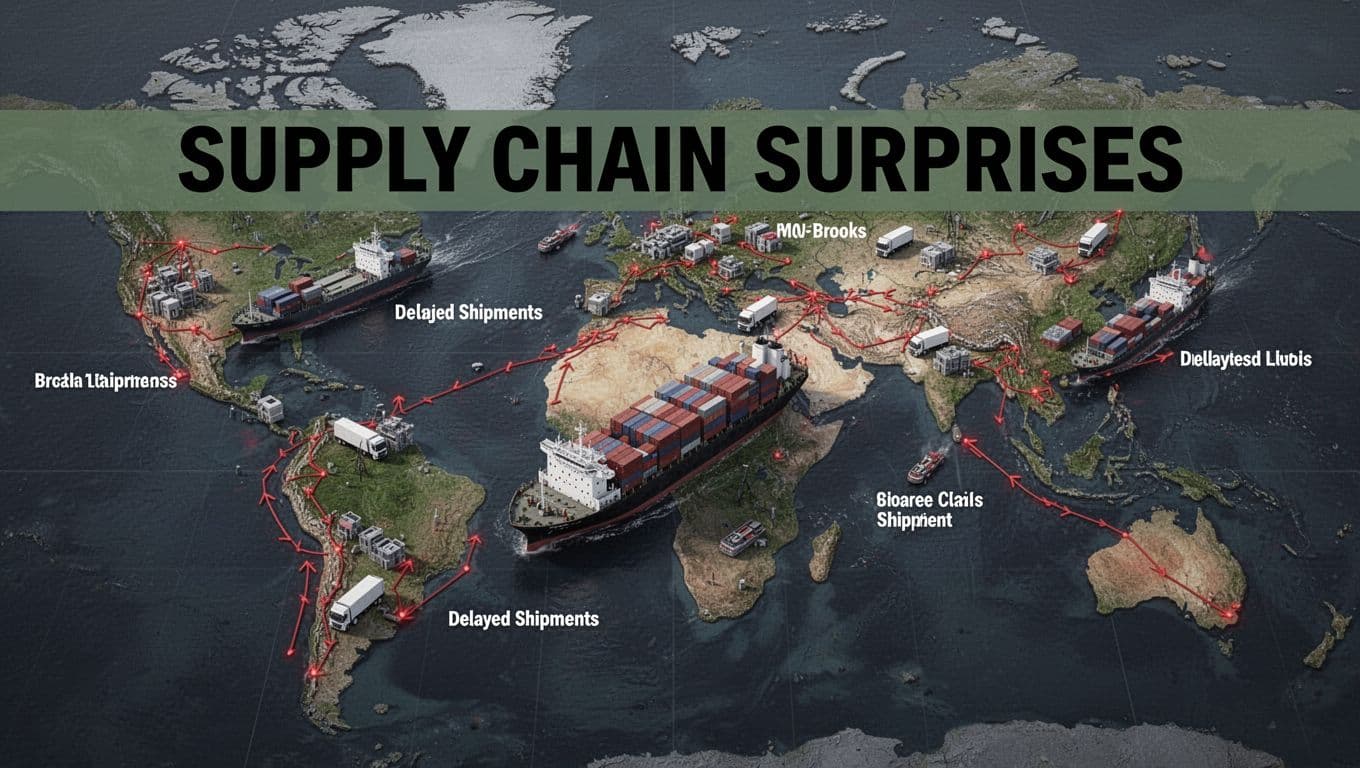
Common supply chain risks that hit quality
These issues show up again and again. The goal is to spot them before they reach production.
| Supply chain issue | Why it happens | How it hits quality |
|---|---|---|
| Alternate suppliers | Cost and tariff pressure | Different specs cause defects or variation |
| Rushed sourcing | Shortages and deadlines | Quality checks get skipped or simplified |
| Material substitution | Missing parts or inputs | Performance changes, batch variance increases |
| Fragmented supplier data | Email and spreadsheet sprawl | Wrong part or spec used in builds |
| Delays in shipping | Congestion and risk | Storage conditions change, components degrade |
In 2026, disruptions can raise expenses by 3% to 5% and cut sales by about 7%, and part of that drop comes from weaker customer trust tied to quality.
If you want a clear framework for thinking about supply chain quality, Quality Magazine covers it well in Supply Chain Quality: Everything You Need to Know.
Unchecked Suppliers Bringing Hidden Risks
Supplier risk often looks harmless at first. A new supplier might pass an initial test. Then a later batch fails because something changed in materials, processes, or tooling.
Unchecked suppliers are risky because they hide variation. Even small differences matter. A slight change in material grade, curing time, or assembly method can shift performance. When your process assumes every batch is the same, that shift causes defects.
This risk grows when teams rush onboarding during shortages. They try to “buy their way out” of delays. Then quality problems show up later as rework, returns, or recalls. Brand damage follows quickly, especially in markets where buyers compare reviews after one bad experience.
Also, if supplier quality management isn’t treated like a real business risk, teams may only react after issues. 2026 supplier-quality coverage emphasizes that supplier quality needs to be handled as a frontline risk, not a downstream audit problem. For trends and supplier challenges, see supplier quality challenges and trends in 2026.
In other words, quality is only as stable as your supply base. If your supplier network changes often, your quality plan must change too.
Management Choices Putting Cost Before Quality
Quality problems don’t just happen on the floor. They also happen in meetings.
In 2026, poor management practices often show up as:
- Skipping key checks like design risk reviews and process monitoring
- Overloading teams so quality gets rushed
- Pushing profit goals that squeeze time and staffing
When leaders skip tools like Failure Mode and Effects Analysis (FMEA) or Statistical Process Control (SPC), problems find their way into production. The defects keep repeating because nobody built a system to predict them.
Also, leaders often don’t plan for training and change. When people lack time to learn, they work around the gaps. That leads to mistakes, inconsistent results, and slow fixes.
Another painful pattern is overload and burnout. Quality work needs focus. If teams feel constant pressure, quality reviews turn into quick glances. Then defects pass.
There’s also a cost angle that managers can’t ignore. When quality gets ignored, poor practices can waste up to 40% of resources. That includes labor spent on rework, extra shipping, returns handling, and customer support hours.
And remember the earlier point about errors. Fixing errors after they happen can cost up to 100 times more than preventing the problem in the first place. That’s why reacting to complaints feels cheaper at first, then becomes expensive fast.
If your quality system only responds after customers complain, you’re paying for mistakes twice.
So what should management focus on? Alignment. Quality goals have to match business goals. If procurement chases the lowest cost while engineering expects strict specs, you create tension that turns into defects.
Most importantly, leaders need to give teams time and clarity. Without that, quality becomes a hope, not a plan.

2026 Trends Making Quality Tougher Than Ever
Quality feels harder in 2026 for a few reasons. Buyer expectations rise after every launch. Supply chains remain unstable. Data moves fast, but it’s often messy.
At the same time, teams have more tools than ever. AI and automation can help spot defects earlier. Cloud systems can track quality in near real time. Teams can start testing earlier, sometimes described as “shift-left.” That’s a real improvement.
However, trends also bring new risks:
- AI and data depend on clean inputs. Bad data leads to wrong decisions, and wrong decisions lead to wrong products and services.
- Cyber risks rise as monitoring becomes more connected.
- Tool overload can create false alarms or confusion if teams don’t govern the process well.
- Speed pressure can push teams to ship before issues get fully checked.
Also, poor data quality can hurt quality directly. One 2026 data-focused summary notes big losses from bad data, including the fact that poor data quality can drive lost revenue through wrong decisions and rework. It also highlights how fixing errors can cost far more than preventing them. In other words, quality issues often start with the information teams rely on.
Here’s the hopeful part. If you treat quality as a system, not a department, you can improve even during volatility. AI can help, but it won’t replace good standards, clear checks, and honest feedback loops.
So the real challenge in 2026 is discipline. You have to keep your quality basics strong while you adopt new tech.
Conclusion: The Real Causes Are Repeating Patterns
Quality issues happen because human error, flawed processes, supply chain volatility, and weak management choices keep repeating in different forms. Sometimes the mistake is obvious, like skipping a step. Often it’s quiet, like inconsistent checks or siloed teams that never connect complaints to process changes.
In 2026, buyers notice fast. They also switch fast. That’s why prevention matters more than ever. When you reduce error sources, tighten standards, and track supplier risks, you protect both trust and sales.
Take one next step this week: audit your current flow. Look for where errors enter, where checks fail, and where teams lack follow-up. Then fix the biggest bottleneck first. What part of your system lets quality problems slip through most often?