Ever notice how a cluttered desk slows you down, even when you “know what to do”? Continuous improvement works the same way, but for work and habits. Instead of one big change, you make small tweaks over time. Those tweaks add up, and your results get better without a huge disruption.
In business, continuous improvement helps teams find waste, fix problems, and improve quality. In daily life, it can mean better routines, smoother planning, and fewer repeat mistakes. The idea comes from Kaizen, a Japanese approach known for steady progress.
Below is the simple version: where continuous improvement came from, the core principles that make it stick, a clear step-by-step launch plan, and real examples you can copy.
The Origin Story of Continuous Improvement and Kaizen
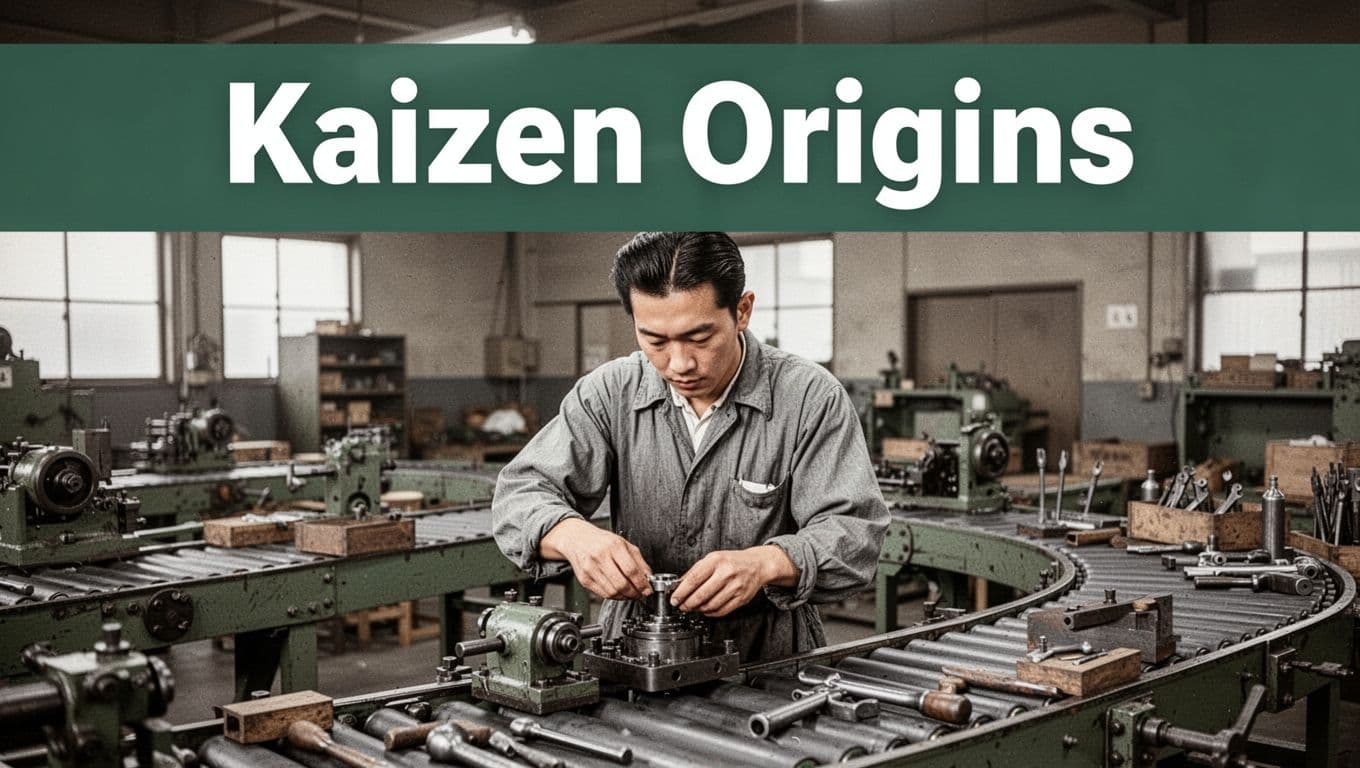
Continuous improvement took off after World War II, when Japan needed to rebuild fast. Factories faced big challenges, like shortages and low confidence in quality. So companies started asking a simple question: “What can we improve today, with what we already have?”
That mindset connects to Kaizen (change for the better). It did not focus on one sudden invention. Instead, it focused on steady improvement in everyday work. Over time, companies refined how they looked at problems, tested fixes, and updated routines.
If you want a quick history view, this overview of Kaizen’s development is a good starting point: The history of Kaizen – QualitiAmo.
A key shift happened as factories grew smarter about process, not just outcomes. People learned to look at how work moved from step to step. They noticed delays, rework, and defects, then treated those as clues.
Toyota later became one of the most famous companies linked to Kaizen. In the 1980s, their approach to continuous improvement helped shape how global manufacturing talked about quality and efficiency.
In plain terms, the story is this: rebuild under pressure, improve every day, and involve the people doing the work. When that pattern repeats for months and years, quality rises and waste drops. An assembly line that keeps speeding up is not magic. It’s feedback, learning, and small fixes done again and again.
How Toyota Made Kaizen a Worldwide Hit
Toyota’s role matters because they made Kaizen more than a slogan. They turned it into routine habits.
At the center is the belief that workers closest to the process often see problems first. So they create ways for staff to suggest improvements. Then leaders treat those suggestions as part of daily management, not a one-time event.
That’s how Kaizen spread widely, because it worked in real factory settings. Teams reduced defects, lowered delays, and improved flow. They also built confidence in learning, which made it easier to tackle tougher problems later.
If you’d like another look at the evolution from Japanese roots to a global business practice, this page covers that timeline: History and Evolution of Kaizen.
Even today, you can see the pattern in modern operations. People test a change in a small area. If it works, they update the standard way of doing the job. Then the improvement spreads.
That “test, learn, repeat” rhythm is the heart of continuous improvement.
Core Principles That Make Continuous Improvement Stick
Continuous improvement sticks because it feels doable. It’s not about being perfect. It’s about learning fast and improving steadily.
Here are five core principles, explained in simple terms.
Small steady changes: Instead of big risky moves, you improve one part at a time. Think of it like washing a car. Doing it little by little beats doing it once, chaotically.
Involving everyone: Ideas should come from the people doing the work. A manager might spot trends, but a worker sees friction up close.
Eliminating waste: Waste is anything that doesn’t help the customer or the goal. It can be extra steps, waiting, rework, or confusion.
Using data and tests: You don’t guess forever. You measure, run small tests, and compare results. Even basic numbers help.
Fostering a respectful culture: People must feel safe to report issues. If the team fears blame, problems get hidden. When respect grows, learning grows too.
Here’s a quick everyday example. Suppose cooking dinner takes too long. You might reduce waste by prepping ingredients first. You can also test by trying a new order for steps. Then you update your “normal” routine for next time.
Over weeks, those small habits build a smoother process. And the best part is this, once the team learns the method, it keeps working.
Continuous improvement isn’t a one-time project. It’s a habit of noticing, trying, and improving.
Why Small Changes Beat Giant Overhauls Every Time
Big overhauls can feel exciting. Still, they often create new problems while fixing old ones. They also demand lots of training, time, and money.
Small changes spread risk out. You test them on a small scale. If it fails, you learn quickly and adjust. If it succeeds, you can standardize it with less disruption.
Think about your commute. If you switch routes, traffic apps, and timing all at once, you’ll never know which change helped. However, if you adjust one thing at a time, you can connect cause and effect.
Continuous improvement works the same way. It’s how teams find “what actually worked” without guessing. Over time, those improvements compound. That’s when results start to feel noticeable, not just incremental.
The Power of Team Input from Top to Bottom
When you invite input, you get better ideas. You also get better buy-in.
But team input needs structure. Otherwise, suggestions turn into complaints. So teams often use simple tools like regular check-ins, suggestion paths, and short improvement sessions.
It also helps to make participation normal. In strong improvement cultures, people bring ideas without fear. A good improvement question sounds like this: “What makes this step harder than it should be?”
Top leaders still matter. They set priorities, remove barriers, and back the process. Yet the best improvements usually come when managers listen first.
In real workplaces, you’ll see it in small moments. Someone notices a tool stored in the wrong place. Someone else spots that a form gets filled twice. Then the team fixes the root cause, not just the symptom.
When input flows both ways, continuous improvement becomes a team sport. And teams move faster because people feel responsible for results.
Spotting and Scrapping Waste in Everyday Tasks
Waste sounds like a business term, but you can spot it in daily life.
Waste is anything that costs time, money, or quality without adding value.
Here are common types of waste you might recognize:
- Waiting: you pause for approvals, downloads, or someone else’s update
- Rework: you redo the same task because details were missed
- Extra steps: you follow a process that no longer makes sense
- Overprocessing: you add polish where it doesn’t matter
- Lost motion: you walk back and forth because items aren’t ready
Now look at your own routine. Maybe you have to hunt for supplies. Or you keep switching between apps to get one task done. Then you feel tired before the work even starts.
Scrapping waste starts with simple observation. Watch the process for 10 minutes. Write down what slows you down. Then choose one small fix you can test this week.
Even one waste reduction can create relief. The job feels lighter, and you get more energy for the next step.
Step-by-Step Guide to Launching Continuous Improvement
A simple way to run continuous improvement is the PDCA cycle. It’s a loop that pushes learning forward.
You can think of PDCA as:
- Plan: spot the problem and plan a small change
- Do: try it on a small scale
- Check: review results and compare to expectations
- Act: keep what worked, or adjust and try again
If you want a clear explanation of the cycle, see Using the PDCA Cycle to Support Continuous Improvement (Kaizen).
Now here’s a practical seven-step launch you can use at work or at home.
- Pick one process you care about
Choose a single part of your day, workflow, or team task. - Spot the real problem
Look for delays, errors, confusion, or repeat work. - Analyze with data
Use counts, timers, or simple notes. You can start with rough numbers. - Plan a small fix
Make it specific. Define what you’ll try and who will do it. - Test the change
Run a short trial. Use a limited scope so you learn fast. - Check the results
Compare before and after. Ask, “Did it get better?” - Standardize and repeat
If it worked, update the routine. Then find the next small improvement.
A simple tip: start in one area only. If you try to improve everything at once, you’ll lose focus. Plus, you won’t learn which change mattered.
Try a Kaizen Event for Quick Team Wins
Sometimes you need momentum. That’s where a Kaizen event helps.
A Kaizen event is usually a short workshop, often 3 to 5 days. Teams focus on one problem and leave with a tested improvement.
In the best events, roles are clear:
- A facilitator keeps the session moving
- People from the process share observations
- Someone handles quick measurement
- Others test ideas and document results
During the event, teams often do fast root-cause thinking. Then they plan a small test they can run immediately. After that, they review what changed and what they learned.
Even if you don’t run a formal event, you can copy the idea. Set a small timebox. Solve one problem. Then carry the learning into your normal work.
Real improvement feels good. And it makes the next improvement easier.
Real Benefits, Stories, and Tools to Get You Started
Continuous improvement offers benefits you can feel right away. First, quality improves because teams reduce defects and rework. Second, costs drop because waste shrinks. Third, teams feel more in control because they solve problems, not just report them.
It also builds adaptability. When something changes, like new tools or new customer demands, the team already knows how to learn. They don’t panic. They improve.
Here’s a simple story. A hospital team might review wait times. They notice patients wait in one spot for too long. Then they test a new flow, adjust staffing for peak times, and standardize the better process. Over time, the entire experience gets smoother.
You can see similar patterns at home. Maybe you track spending to stop surprise bills. Or you clean your room for 5 minutes each day instead of one long Saturday session. Either way, small changes reduce friction and stress.
Business and Personal Examples That Prove It Works
A factory improvement might start with one defect type. The team checks where it shows up, then tests a change in the workflow. After that, they update the standard steps so the fix sticks.
Toyota-style Kaizen also connects improvements to daily work. Workers see a problem, suggest a fix, and help implement it. That builds trust, and the process keeps moving.
In a service job, continuous improvement might mean shortening a form. Maybe you remove a field that no longer helps decisions. Or you adjust how information flows between teams. Then errors drop and turnarounds get faster.
At home, try a small routine improvement. Make a simple “morning reset” plan:
- Put keys in one spot
- Lay out clothes the night before
- Write one goal on paper
Do this for a week. Then adjust one detail. That’s continuous improvement in plain clothes.
Must-Have Tools Like PDCA and 5 Whys
You don’t need a huge toolkit. You need simple tools that match the job.
Here’s what many teams use:
- PDCA cycle: a loop for plan, do, check, act
- 5 Whys: ask “why” five times to find root cause
- Kanban boards: a visual way to manage work flow
- Suggestion paths: a steady way to collect ideas
- Standard work: the agreed best-known routine
If you want a broader list of commonly used tools, this guide can help: Continuous improvement tools guide.
For personal use, you can simplify even more. Use a timer, a note app, and one “before and after” comparison. The goal is learning, not paperwork.
When you keep tools simple, people actually use them.
What’s New in Continuous Improvement for 2026
Continuous improvement keeps changing with how work happens now. In 2026, you’ll see a few clear trends.
First, AI is helping analyze patterns. For example, teams can use AI to sort reports, find repeated issues, and suggest possible causes. Humans still decide what to test, but AI can speed up the “what’s happening?” part.
Second, teams run hybrid improvement better than before. People might meet online for planning, then test on-site. Then they review results with shared dashboards. That makes improvement more consistent across locations.
Third, sustainability shows up more often. Teams look for waste in energy use, materials, and shipping. They still use the same method: spot waste, test a fix, standardize what works.
This 2026 guide to digital Kaizen is one example of how the tools are evolving: Kaizen in Manufacturing: A Digital Transformation Guide (2026).
One more point is worth noting. AI can speed things up, but it doesn’t replace good process thinking. You still need a clear problem, a small test, and a real check of results.
When you combine human judgment with smarter analysis, continuous improvement becomes easier to run and easier to repeat.
Conclusion
Continuous improvement is about small, steady changes that make work and life better over time. It traces back to Kaizen, with roots in post-war Japan and a strong push for everyday learning.
You can start with the principles: small changes, everyone’s input, less waste, simple data checks, and a respectful culture. Then run the cycle with a clear plan: spot a problem, test one fix, check results, and standardize.
The strongest takeaway is simple. Pick one small improvement today, and treat it like a habit, not a one-time task.
What’s one thing you can tweak this week to make your process smoother? Share it, and then try your first Kaizen step this week.