
Poor quality doesn’t just annoy customers. It breaks trust, costs time, and pushes people to switch. In fact, U.S. companies face nearly $1 trillion each year tied to lost sales when customer experiences go bad (often linked to errors, delays, and unhelpful support). When you tighten quality control, you reduce those failures and you see satisfaction rise.
Think of quality control like a seatbelt. It doesn’t make the ride fun, but it keeps small problems from turning into crashes. And customers notice when you prevent mistakes before they reach them.
Next, let’s look at what goes wrong when quality control slips, then how strong processes flip the outcome in your favor. You’ll also get practical metrics to track, plus what quality control trends in 2026 that can improve satisfaction faster.
What Goes Wrong When Quality Control Slips
When quality control is weak, customers don’t just see defects. They feel ignored. They also feel the brand won’t take responsibility when something goes wrong.
Picture this: you place an order, it arrives late, and the item has a clear flaw. Or you call support, and the rep gives the wrong info. Each mistake forces the customer back into “problem mode,” and that mood rarely improves. In one widely used satisfaction measure, customer satisfaction stays a strong economic indicator, and benchmarks help show how well companies are doing (see ACSI customer satisfaction benchmarks). When quality control fails, scores tend to stall, too.
Here are common slip points that damage satisfaction:
- Defects slip through because inspections happen too late or too lightly.
- Service errors repeat because training and coaching don’t match real issues.
- No one owns the root cause, so fixes turn into quick patches.
Worse, customers often experience the problem as a pattern. They don’t separate “production” from “support.” They just see the same brand failure again and again. That’s why loyalty can swing hard based on service quality. Research summarized in recent customer experience coverage points to 97% of customers tying loyalty to service quality.
For the business side, these failures add up quickly. Unhappy customers churn, refunds rise, and support teams spend more hours fixing the same avoidable issues. Even if you run promotions, you can lose momentum when quality problems keep stealing attention.

Frustrated Customers Flooding with Complaints
The moment something breaks, customers don’t wait. They contact you right away. That first wave matters because it shapes the whole relationship.
One key idea here is First Contact Resolution (FCR). It measures whether the customer’s issue gets solved in the first interaction. If it doesn’t, you force repeat contacts. You also risk making the customer start over with every agent, every form, every call.
FCR ties directly to satisfaction because it reduces effort on the customer side. For a clear definition and improvement ideas, see First Call Resolution explained.
Then there’s Contact Quality. That’s not just whether the agent fixes the problem. It’s also how they talk to people. Customers get upset when answers feel scripted, when empathy feels missing, or when the rep can’t verify details.
Here’s a simple customer story pattern. A shopper orders a replacement part. The first agent says it’s in stock. It isn’t. The customer calls again. Now they’re not only dealing with the original issue, they’re also dealing with lost time and wasted energy. Quality control should have prevented the mismatch and trained the team to confirm correctly.
Loyalty Loss from Endless Fixes
Repeated issues push customers toward new brands. They stop believing your “sorry” and start counting their next option.
Quality control affects this through two related factors: speed and effort. Even if you eventually fix the issue, long waits can feel like another failure. That’s where Average Handle Time (AHT) comes in. If calls and chats last longer than they should, customers pay with their time. They also feel they’re stuck in a loop.
However, quality problems can inflate handle time fast. Agents search for answers, repeat steps, escalate cases, and request info that should have been available earlier. Then you get a cycle: poor quality causes more questions, which causes longer interactions, which causes more frustration.
A strong quality control program interrupts the loop. It fixes what caused the contact in the first place. It also standardizes the right steps so customers do not need five separate attempts to get one solution.
How Top Quality Control Wins Over Customers
Strong quality control creates a feeling customers can name. It feels like reliability. It feels like you mean what you say.
When quality is consistent, customers know what to expect. That predictability builds trust. It also reduces the mental load on the customer. Instead of watching for problems, they can focus on using the product or service.
Recent experience research summarized in the same customer experience coverage shows two helpful signals: many customers will pay more for a better experience, and improving quality can also cut costs tied to errors. For example, 86% of buyers say they’ll pay more for a better experience, and companies that focus on quality can cut costs of poor quality by 16% over three years.
So what does “top QC” look like in real life? Here are a few scenarios customers recognize immediately:
- Deliveries arrive on time, with fewer returns.
- Repairs work the first time, so customers don’t rebook service visits.
- Support agents use accurate answers and correct policies.
And there’s another advantage. As you scale, your standards must scale too. Quality control helps you avoid the “great at first, messy later” problem that happens when a company grows faster than its process.

Building Rock-Solid Trust Through Consistency
Consistency is the quiet power behind satisfaction. It shows up when teams follow the same rules, use the same checklists, and handle cases the same way.
Customers don’t judge your internal org chart. They judge the outcome they experience. When quality control ensures a uniform standard across locations, shifts, and departments, the customer feels safer. They feel like your brand won’t switch the rules after they buy.
Quality control also protects the “middle moments” that customers remember most. That includes the email updates that arrive on time, the repair status that matches reality, and the refund process that doesn’t surprise people with extra steps. Those moments add up.
Most importantly, consistency supports growth. It helps new staff succeed faster. It reduces training gaps. It also helps managers spot where performance changes start, so they can correct them before customer trust takes a hit.
Delighting Customers with First-Time Perfection
There’s a difference between “good enough” and “no hassle.” First-time perfection is what customers brag about.
When quality control catches problems early, fewer customers need replacements or repeat support. That means less waiting, fewer escalations, and fewer awkward conversations where you ask for proof again.
A simple “before and after” example helps. Before: a customer’s order arrives with a sizing issue. They contact support, then wait for a label, then wait again for a replacement. After: quality control flags the mismatch before shipping. The customer receives the correct item with no extra effort.
That reduction in effort is the heart of satisfaction. People don’t just want results. They want clean paths to those results.
When you get it right, customers often become brand defenders. They recommend you to friends, they leave helpful reviews, and they feel comfortable buying again.
Stats and Metrics Proving the Quality-Satisfaction Link
You can’t manage what you don’t measure. Still, not every metric helps with satisfaction.
The best quality control metrics connect directly to customer effort and customer confidence. That means you should watch contact outcomes, speed, and the consistency of service behavior.
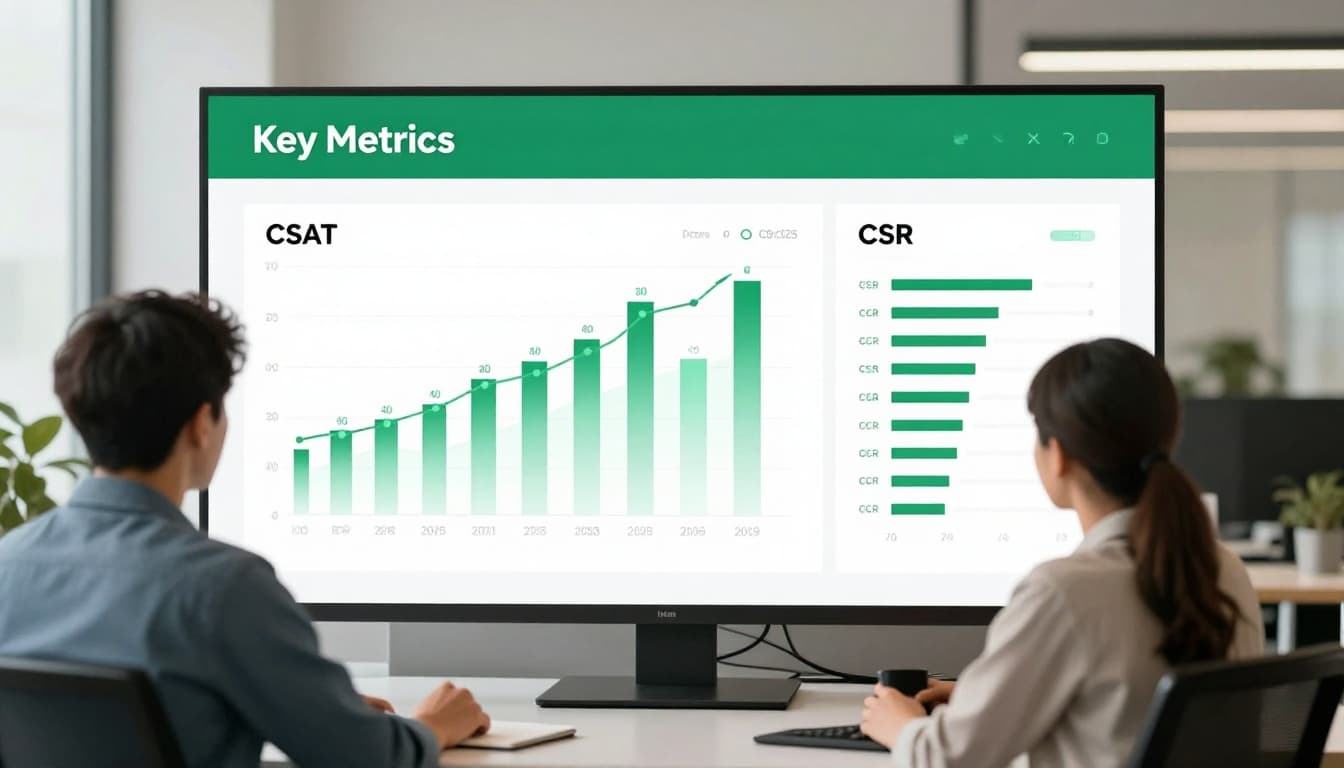
Here’s a quick guide to the metrics that link quality control to customer satisfaction:
This table helps you read the numbers in plain language.
| Metric | What it tells you | Why it affects satisfaction |
|---|---|---|
| CSAT (post-interaction surveys) | How the customer felt right after contact | Low CSAT often shows quality gaps fast |
| FCR (first contact resolution) | % of issues solved without follow-up | High FCR reduces customer effort and repeat frustration |
| AHT (average handle time) | How long customers spend in contact | Shorter is better only when resolution quality stays high |
| Contact Quality reviews | How agents follow standards and show care | Customers notice empathy and accuracy immediately |
Quality programs also show up in cost data. The same coverage that highlights customer experience outcomes notes that quality focus can cut poor-quality costs by 16% over three years. That matters because fewer defects usually means fewer refunds, fewer complaints, and fewer “fix it again” moments.
If you want one practical rule, use this: pick metrics that mirror what customers experience. Then tie those metrics to root-cause fixes, not just coaching after the fact.
And yes, track trends, not just averages. A small rise in defect rate or contact failures can predict a larger satisfaction drop before it shows up in surveys.
2026 Trends Supercharging Quality Control for Satisfaction
Quality control is moving from “catch mistakes” to “prevent mistakes.” In 2026, that shift shows up in smarter monitoring, faster fixes, and tighter feedback loops.
Instead of waiting for complaints, teams increasingly try to spot problems early. They also use more automation to reduce human delay on routine issues. When prevention works, customers feel fewer disruptions. They also feel your brand is in control.
Two themes stand out in 2026: prediction and proof.
AI That Predicts and Prevents Customer Gripes
AI can help quality teams notice patterns sooner. For example, it can flag likely delivery delays based on route signals or inventory movement. It can also detect error clusters in support tickets before they become a daily fire.
In practice, predictive quality control changes the timing. You act before the customer gets stuck. That turns customer care from reaction into prevention.
Some teams already describe this shift in customer service quality assurance tools, including AI-driven monitoring that scales better than manual sampling. See Customer service quality assurance tools with AI QMS.
Still, good results depend on good judgment. AI works best when humans review the signals and confirm what matters for customers. Otherwise, teams get busy with noise. They also risk “fixing” the wrong problem.
Sustainability and Speed Redefining Quality Wins
Customers care about time, but they also care about the waste behind errors. When quality control reduces returns, reshipments, and repeat contacts, you shrink the cost and the environmental impact.
That’s why sustainability shows up in modern quality programs. It often appears through better packaging, fewer failed deliveries, faster repair resolution, and return steps that don’t drag on.
Speed also matters, but only when it’s paired with quality. If you move fast and still send the wrong item, you just create faster frustration. So the real win is speed with proof, meaning customers get accurate updates and correct outcomes the first time.
This trend also aligns with customer support shifts many leaders discuss for 2026, including AI-first support and improved interaction handling. For more context on support trends, see 11 customer service trends in 2026.
When prevention, speed, and sustainability work together, satisfaction rises for a simple reason. Customers spend less time fighting your mistakes.
Conclusion: Quality control that customers can feel
Quality control affects customer satisfaction because it controls outcomes that customers experience directly. When quality slips, people face defects, wrong info, and repeat contacts. When quality improves, customers face fewer interruptions and less effort.
The strongest takeaway is this: measure quality in customer terms, like FCR and contact quality, then fix root causes. You’ll earn trust, reduce churn risk, and make loyalty feel easy.
This week, review one friction point your customers mention most. Then check what your QC process catches today, and what it misses. Finally, track CSAT and FCR so you can see progress with your own data.