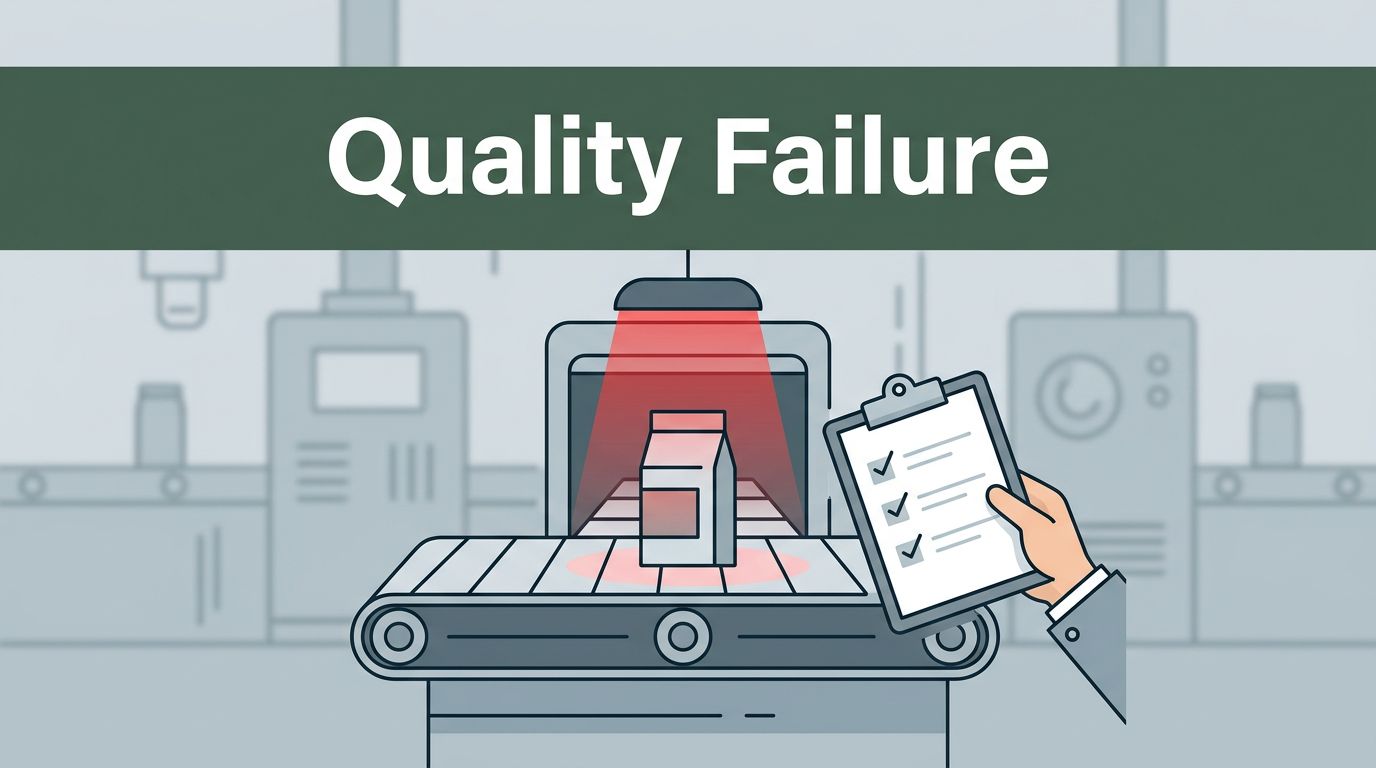
You get a shipment, you run the checks, and then the same problems pop up again. Maybe it’s a toy that fails a basic safety test, or a gadget that breaks after one week. When products fail quality checks, it rarely feels random. It usually points to a weak point somewhere in the process.
Quality checks are meant to catch defects before customers see them. But real life is messy. Parts change, machines drift, people get tired, and designs start from incomplete information. As a result, failures slip through, and the cost lands fast.
The big picture matters, too. Bad quality can hurt safety, damage trust, and stall sales. That’s why it’s worth asking a tough question: Why do these failures keep happening?
The answer usually comes down to a few repeat causes. Faulty materials can sneak in from suppliers. Human mistakes can let defects pass. Machines and processes can drift out of spec. Design flaws may not show up until later. And quality control can weaken when inspections stay too shallow.
Keep reading, because you’ll see each cause clearly, plus practical ways to prevent it.
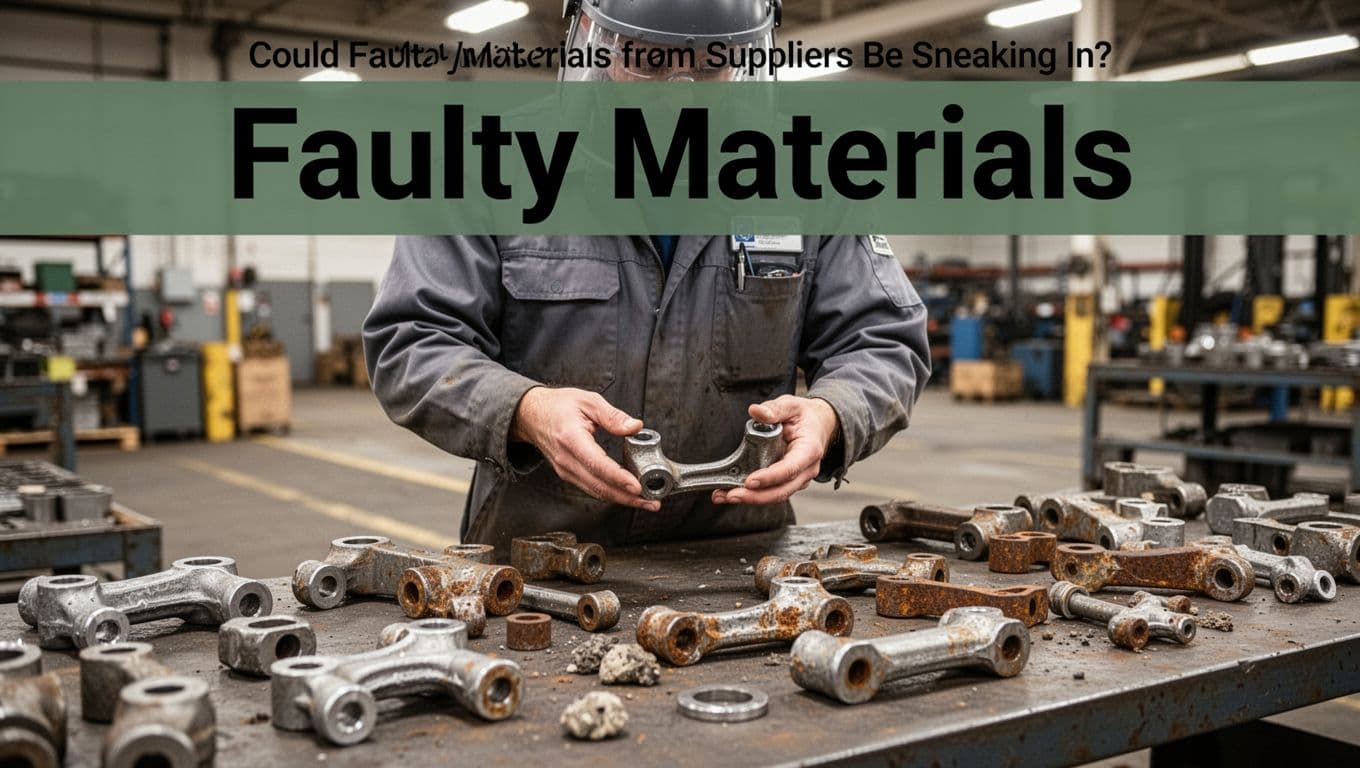
Could Faulty Materials from Suppliers Be Sneaking In?
Sometimes the failure starts before your factory even runs. If a supplier sends weak materials, wrong tolerances, or mixed batches, your line inherits the problem. Then your quality team catches it late, or worse, the defect reaches customers.
Incoming quality control should act like a filter. It checks what arrives, not what you hope arrives. However, many companies skip certain bulk checks to save time. That decision backfires when a small batch shows up with hidden flaws.
A real-world pattern also shows up in regulatory work. For example, FDA warning letters often point to systemic gaps in how companies manage supplier quality and oversight. You can see one summary of those “critical failures in supplier and quality oversight” in this FDA warning letter highlights supplier oversight failures.
Here’s the key idea. Your production is only as strong as the parts you feed it. If a critical component is inconsistent, your own tests can miss the issue (especially if you test only a small sample).
Spotting Defective Parts Before They Ruin Everything
Start at receiving. Look for clues that bad materials tend to leave behind. Inconsistent size is one. Rust spots, surface pits, or odd discoloration can be another. Also watch for parts that “feel” wrong during basic fit checks.
You don’t need fancy gear to catch many issues. For many components, a simple receiving routine works:
- Visual checks for surface defects and obvious mix-ups
- Basic dimension tests (the kind you can repeat fast)
- Simple functional checks for parts that should move, seal, or connect
Then track what you find. If the same supplier defect appears again, it’s not a one-off mistake. It’s a supplier process problem.
Consider a quick automotive-style example. If a supplier delivers sunroof rails with uneven material thickness, the fit test can fail in weird places. Then water leaks can appear later, even after assembly looks “fine” at first glance.
Also, don’t ignore batch trends. A defect rate that doubles in one week often means a supplier changed a process, supplier, or material source.
Why Supplier Audits Save Headaches Down the Line
A supplier audit isn’t just paperwork. It’s where you learn if the supplier controls quality at the source. Ask what they measure, how often they test, and what happens when results fail.
Good audits cover more than one sample. They check how suppliers handle normal variation. They also reveal whether quality staff have the power to stop a shipment.
Long-term partnerships matter, too. When a supplier knows you’ll audit and verify, they plan better. When they think you’ll just accept and rework, they lose pressure to improve.
Supplier problems can also trigger larger cost swings later. Recent manufacturing cost reporting notes that late design changes (often called ECOs) can create expenses roughly 10 times higher later in production. That’s why supplier issues matter even when your own line seems stable. The fix often turns into rushed changes, extra testing, and scrapped parts.
Human Mistakes That Let Defects Slip Through Cracks
Even with good parts and decent equipment, people still run the line. Human error is one of the most common reasons products fail quality checks.
Mistakes can come from basic causes. Training gaps are common. Fatigue shows up on long shifts. Pressure to hit a deadline can lead to shortcuts. Small errors then cause big outcomes, because assembly steps depend on each other.
Think of the factory like a chain of dominoes. One missed screw can shift a part just enough to ruin alignment. Then the sealing surface might not seat correctly. Finally, the defect shows up during inspection, or it shows up in the field.
If you want a broader view of common quality control issues, this SC Training list of quality control issues you can fix is a helpful starting point for seeing how frequently human and process gaps overlap.
Training Gaps and Worker Fatigue Add Up Fast
If a technician can’t explain why a test matters, errors rise. That’s a training issue. If the training happened once, years ago, errors rise again. That’s a refresh problem.
Fatigue makes it worse. When people work long hours, the brain stops catching details. Then “close enough” turns into a passing grade, even when it shouldn’t.
Short, practical training refreshers help. They don’t need long lectures. Use real defect photos. Walk through one or two failure modes. Then practice the right response quickly.
Also, keep training tied to what workers do each day. If your line assembles two models, train on both. If one model fails more often, train on that step more.
Rushing Production Under Tight Deadlines
Deadlines push people to move faster. Speed sounds good, but quality work has rules. When those rules get skipped, defects pile up.
A common scenario looks like this. The schedule slips, then a team starts “catching up.” They check fewer parts per hour. They delay rework paperwork. Or they assume a supplier part is fine because the last batch looked okay.
Then a simple mistake becomes a system problem. For example, a missed screw might not fail immediately. The product may pass early checks. But later, a vibration test or water exposure test exposes the weak point.
If you run a tight line, protect critical inspection steps from hurry. Mark the steps that stop defects from escaping. Then hold those steps steady, even when the rest speeds up.
When Machines and Processes Go Off Track
Machines are supposed to be consistent. Still, they drift. A tool wears down, a sensor gets dirty, and a setting gets changed “temporarily.” Over time, those changes create hidden defects.
Process issues can also come from the environment. Heat, humidity, and dust can change outcomes. A machine that works fine on Tuesday might behave differently on Friday, if conditions shift.
Many teams focus on production targets and forget maintenance signals. Yet calibration and maintenance often protect you from sudden failure.
Calibration Slip-Ups That Create Hidden Defects
Calibration affects measurements. If a gauge drifts, you can approve bad parts without realizing it. Then those parts move into assembly, where they cause fit issues or surface defects.
This is why calibration must be routine, not reactive. If a tool is out of spec, it can create scratches, dents, or misfits that inspections later struggle to classify.
For more on how calibration problems happen, and what causes them, see Understanding calibration problems and solutions.
A simple example: if a cutter height is off by a small amount, the product might still look “right.” But under load or stress, the tolerance gap becomes the failure point.
Environmental Factors Disrupting Your Line
Even when machines work, conditions can shift the result. Temperature can affect adhesives and seals. Humidity can affect certain materials. Dust can affect sensors and measurement tools.
The practical fix is monitoring. Track key conditions. If your line works at 72°F, know what happens at 62°F or 85°F. Set thresholds that trigger a pause and inspection.
Also, keep your measurement devices clean. A dirty sensor can create a false reading. It might even look “stable” for a while. Still, stability can be a trap when the reading is wrong.
Design Flaws That Only Show Up Later
Sometimes the problem isn’t the factory at all. The problem is the plan.
Design flaws show up when prototypes pass tests but real use exposes gaps. A product might handle one set of conditions. Yet it fails when customers use it differently.
Design also fails when teams ignore past incidents. If your company doesn’t store defect data clearly, the same mistake repeats under a new name.
When the design is weak, quality checks can become a bandage. Inspectors then hunt for symptoms, not causes. That means you might catch some defects, but not all of them.
Bad Planning from the Drawing Board
A design needs tests that match real life. If tests skip key stress cases, defects show up later. You can’t inspect your way out of a design that never accounted for real-world strain.
Electronics are a good example. Heat and vibration can shift performance over time. Toys are another example. Small parts and materials must match safety rules, or failures can show up during regulatory checks.
Forgetting Lessons from Past Problems
Records matter. If a team forgets why a prior batch failed, it will likely fail again. That’s true for supplier changes, material substitutions, and assembly tweaks.
Documentation should be simple. Link failure modes to the real step. Then connect each failure mode to a clear prevention action. Without that, quality teams end up repeating the same detective work.
Quality Control Weaknesses Opening the Door to Failure
Quality control is the last line, but not all last lines are strong.
Some inspections are too shallow. Others classify defects the wrong way. Still others depend on inspector mood, speed, or fear. Over time, a company can fall into “quality fade,” where standards drift quietly.
You also see issues when final checks rely on too few samples. Or when the inspection list stays the same while products change.
Skipping Key Inspection Steps
Every inspection list should reflect risk. Some defects are cosmetic. Others affect safety, function, or durability.
If you treat all defects the same, the most harmful ones get buried. Then products fail quality checks at the worst time, when returns and recalls cost more than prevention.
A strong checklist does two things. It reminds people what matters. It also helps the next shift follow the same logic.
Quality management system failures often look similar across industries. If you want another perspective on how systems break down, this QAD blog on quality management system failures shows how people, processes, and controls can fail together.
The Slow Drift of Quality Fade
Quality fade doesn’t usually happen overnight. It often starts as a “temporary adjustment.” Then those adjustments become normal.
For example, a company might reduce the inspection frequency because “the line seems stable.” Or it might accept borderline samples because the deadline is near.
After a few cycles, the standard drops without anyone raising a red flag. Meanwhile, defects become more common. Eventually the defect rate triggers customer complaints, regulator attention, or costly replacements.
The fix is to audit the audits. Review inspection outcomes, not just the checklist. If scrap rises, ask why. If rework increases, ask why. If escapes happen, trace them back to the step that let them through.
Real Stories of Products That Bombed Quality Tests
Quality failures often start with an avoidable detail. A bad supplier batch. A calibration slip. A design gap that prototypes never caught.
One case that shows the cost of quality mistakes is the Takata airbag recall story. That event wasn’t just one factory fault. It reflected deeper issues in how quality was handled, verified, and managed across time. If you want a plain-language case view, see What happens when you really get quality wrong (Takata).
Automotive component failures also show how supplier processes can matter. Heat treating errors have led to part recalls, including ball stud issues linked to a supplier. That kind of story is a reminder that “only one process step” can shift performance, even if the rest looks fine. For a supplier-related example, check Supplier named in faulty heat treating of ball studs.
And then there are the everyday versions of these stories. A toy fails lead-related checks. An electronics batch misses a performance threshold because calibration drifted. A seal fails because material mix changed.
What ties them together is simple: the failure becomes visible only after a weak point meets real conditions. That’s why you should strengthen the whole chain, not just the last inspection.
Conclusion: Stop the Escape, Not Just the Symptom
When products fail quality checks, it usually means the problem started earlier than the inspection desk. Faulty inputs from suppliers can sneak in. Human error can slip defects past the line. Machines drift, designs miss real-world tests, and quality controls can weaken over time.
The best takeaway is also the simplest. Prevention beats chasing problems after they leave the building.
Here are five practical steps you can act on now:
- Audit suppliers and verify incoming quality, especially for critical parts.
- Train and refresh staff using real defect examples and short drills.
- Calibrate and maintain equipment on a fixed schedule, not “when it seems off.”
- Fix design risks early with tests that match how people actually use the product.
- Strengthen inspection controls with clear checklists and reviews of inspection results.
If you want fewer defects, fewer recalls, and happier customers, start with your weakest link today. What’s the last quality failure you saw, and which step let it escape?